select language: DE-AT
DE-BE
DE-CH
DE-DE
EN-AU
EN-CA
EN-GB
EN-IN
EN-NZ
EN-US
ES-AR
ES-ES
ES-MX
FR-BE
FR-CA
FR-FR
IT-IT
JA-JP
NL-BE
NL-NL
PT-BR
ZH-CN
DE-AT
DE-BE
DE-CH
DE-DE
ES-ES
FR-BE
FR-FR
IT-IT
NL-BE
NL-NL
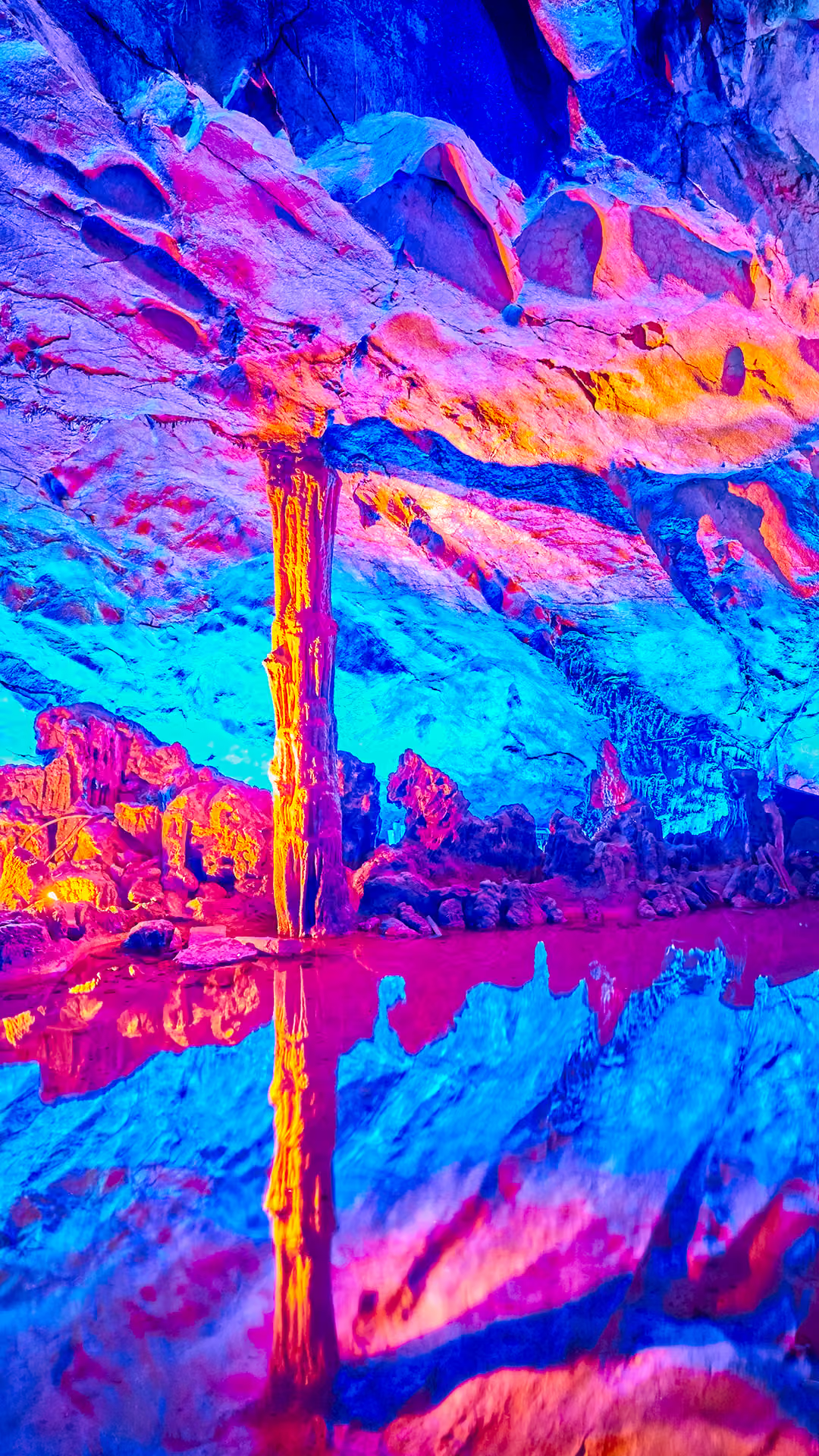
Reed Flute Cave, Guangxi, China
A light show down below
The scenery of Guangxi extends even below the region's resplendent surface, its steep karst geology concealing a magical world underground. Although nature carved it, Reed Flute Cave's splendour has been lightly assisted by humans. First artificially lit in the post-World War II era, today it's wired up with a rainbow of electric lights that illumine the cave's natural mirror pond, accenting an already fantastical aura. The cave's name comes not from its flute-like stalactites and stalagmites (and even columns such as the one in this shot) but from the bamboo-like reeds that grow just outside of it, long used to make traditional xiao flutes.
© Maciej Bledowski / Shutterstock 2026-09-11 08:45:52 :