select language: DE-DE
EN-AU
EN-CA
EN-GB
EN-IN
EN-NZ
EN-US
ES-AR
ES-ES
ES-MX
FR-CA
FR-FR
IT-IT
JA-JP
NL-NL
PT-BR
ZH-CN
DE-AT
DE-BE
DE-CH
DE-DE
ES-ES
FR-BE
FR-FR
IT-IT
NL-BE
NL-NL
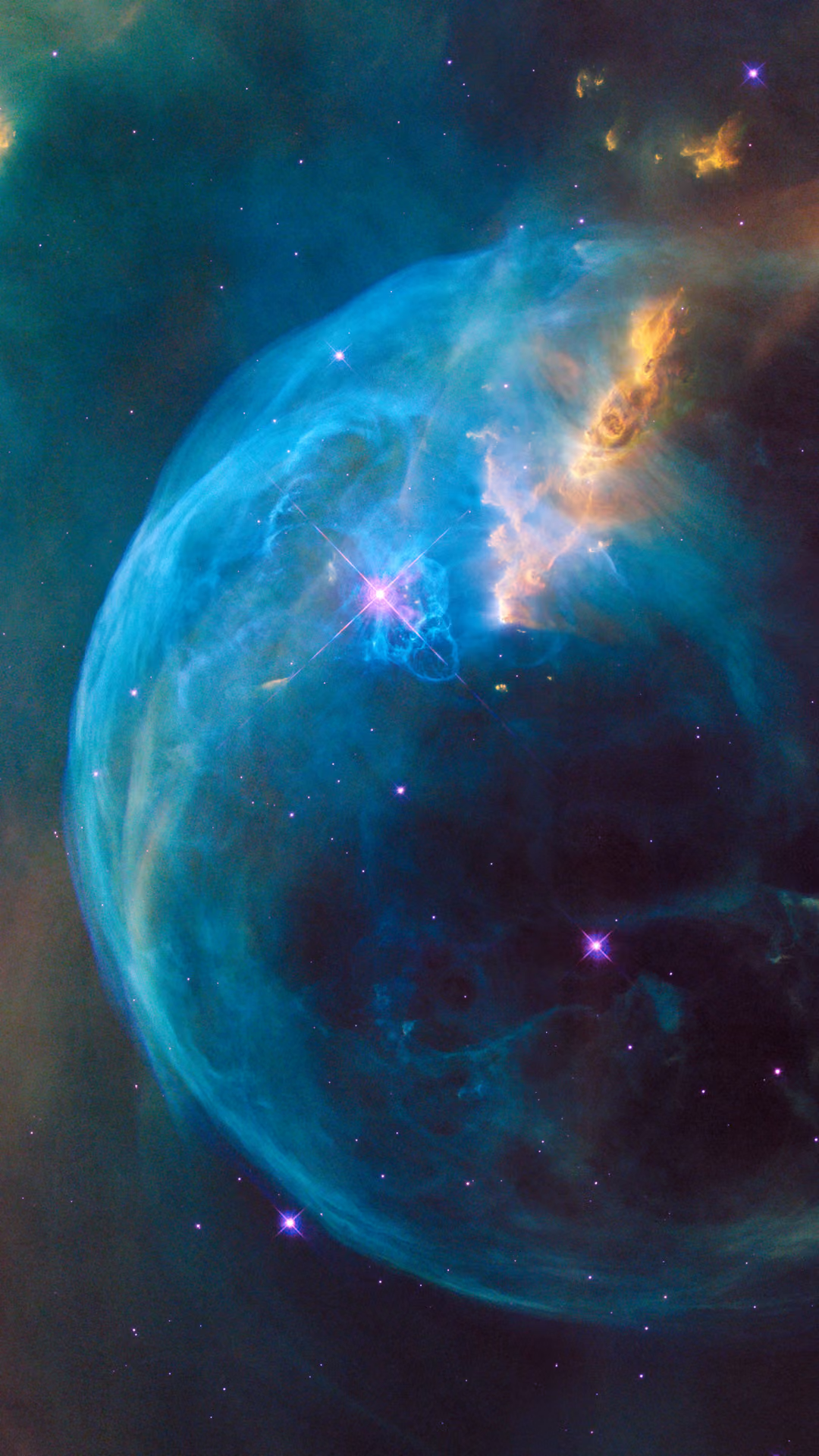
Bubble Nebula (NGC 7635)
Space blows
Give the world champion bubble-blower all of the gum ever made and they still couldn't match the mass of this seemingly inflatable space object – seen here as snapped by the Hubble Telescope. The "lungs" that blew up the Bubble Nebula belong to the flared point of light in the sphere's top left – a star called BD+602522, whose stellar winds force gas and dust outwards in all directions, ballooning to a diameter of 6 light years or more. We hate to burst your bubble, but even stars breathe their last eventually. Astronomers think BD+602522 will go supernova in 10 to 20 million years, a cosmic cataclysm sure to make this nebula pop.
© NASA, ESA, and the Hubble Heritage Team (STScI/AURA) 2026-09-11 08:45:52 :