select language: DE-AT
DE-BE
DE-CH
DE-DE
EN-AU
EN-CA
EN-GB
EN-IN
EN-NZ
EN-US
ES-AR
ES-ES
ES-MX
FR-BE
FR-CA
FR-FR
IT-IT
JA-JP
NL-BE
NL-NL
PT-BR
ZH-CN
DE-AT
DE-BE
DE-CH
DE-DE
ES-ES
FR-BE
FR-FR
IT-IT
NL-BE
NL-NL
Red Fort in Delhi, India
An audience with emperors
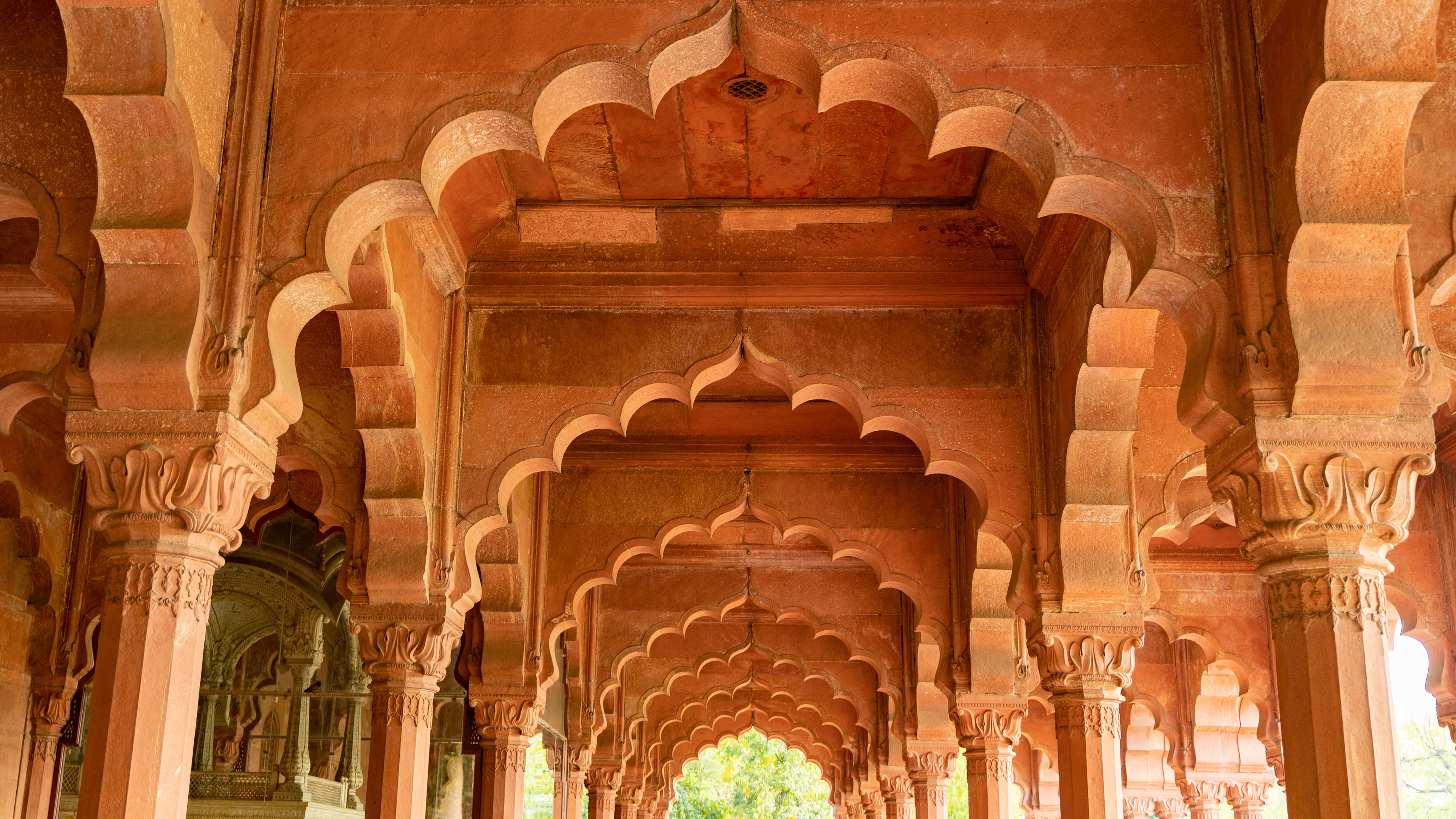
The towering Red Fort, housed among the bustling streets of Old Delhi, echoes the grandeur of India's history. Commissioned by the Mughal Emperor Shah Jahan in the mid-17th century, it is named for its red sandstone walls, boasting a blend of Persian, Timurid and Indian architectural styles. From the majestic Lahori Gate to the intricate designs of the Diwan-i-Khas private reception hall, each alcove tells a story. Our image features a view of the carved columns and ceiling of another audience hall – the Diwan-i-Am. It served as a gathering place where the public could bring concerns and petitions to the emperor.
© Arnav Pratap Singh / iStock / Getty Images Plus 2026-09-11 08:45:52 :