select language: DE-DE
EN-AU
EN-CA
EN-GB
EN-IN
EN-NZ
EN-US
ES-AR
ES-ES
ES-MX
FR-CA
FR-FR
IT-IT
JA-JP
PT-BR
ZH-CN
DE-AT
DE-BE
DE-CH
DE-DE
ES-ES
FR-BE
FR-FR
IT-IT
NL-BE
NL-NL
DE-AT
DE-BE
DE-CH
DE-DE
EN-AU
EN-CA
EN-GB
EN-IN
EN-NZ
EN-US
ES-AR
ES-ES
ES-MX
FR-BE
FR-CA
FR-FR
IT-IT
JA-JP
NL-BE
NL-NL
PT-BR
ZH-CN
DE-AT
DE-BE
DE-CH
DE-DE
ES-ES
FR-BE
FR-FR
IT-IT
NL-BE
NL-NL
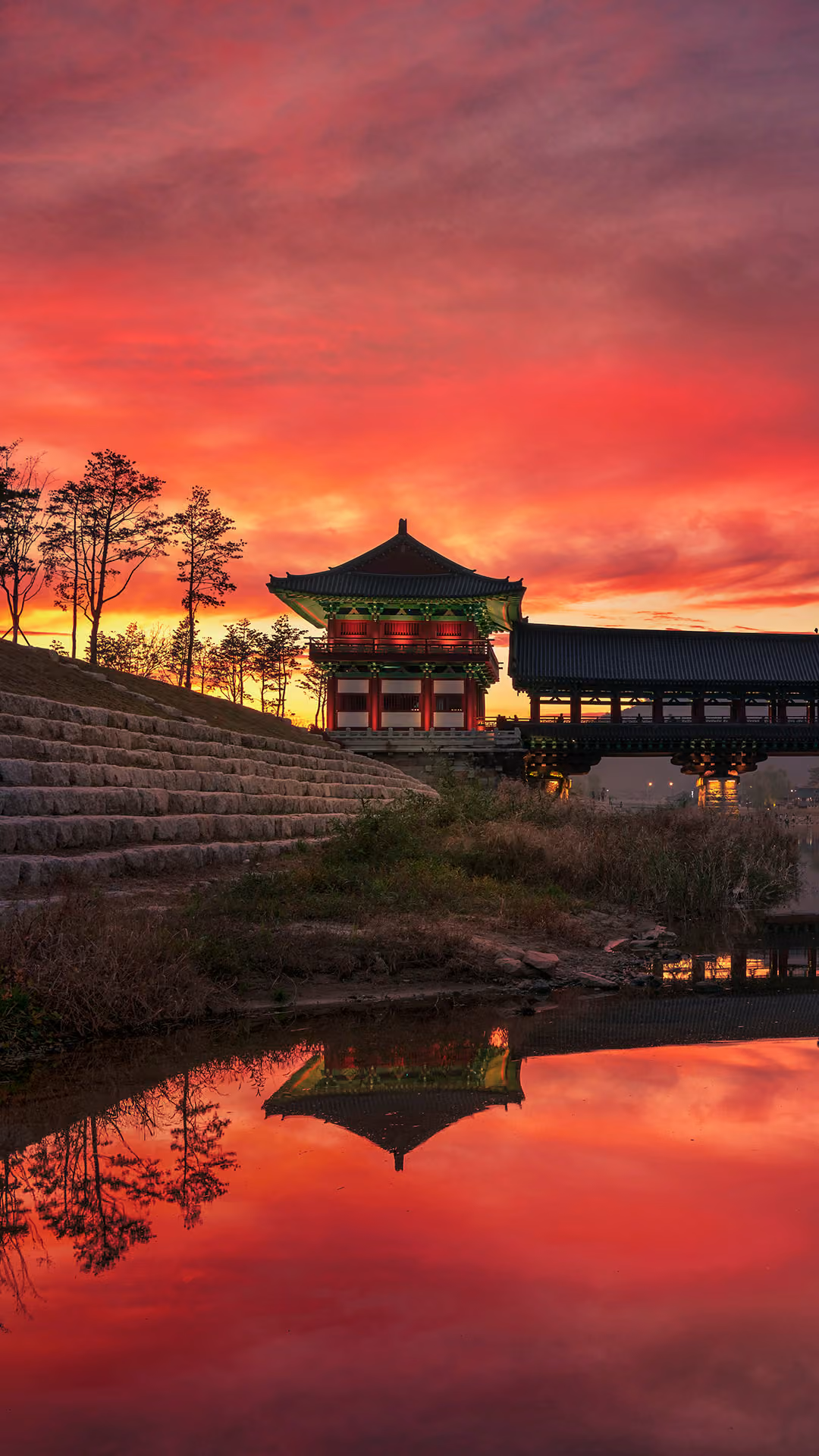
Woljeonggyo, South Korea
Built for a king
The bridge known as Woljeonggyo was built during the 8th-century reign of King Gyeongdeok, the 35th monarch of Silla. Stretching almost a half a kilometres over what's now Gyeongju's Andong Dam, it still holds the record as Korea's longest wood pedestrian bridge. The span is just one piece of Gyeongdeok's legacy as a moderniser who advanced Buddhist art and design and helped centralise a formerly feudal government. Marvels like Bulguska Temple and Seokguram Grotto began construction during his reign, setting the stage for Gyeongju's present renown as a "museum without walls".
The king behind this bridge built himself a legacy of architectural, artistic and societal advances.
© wiwat ton / Shutterstock 2026-09-11 08:45:51 :