select language: DE-AT
DE-BE
DE-CH
DE-DE
EN-AU
EN-CA
EN-GB
EN-IN
EN-NZ
EN-US
ES-AR
ES-ES
ES-MX
FR-BE
FR-CA
FR-FR
IT-IT
JA-JP
NL-BE
NL-NL
PT-BR
ZH-CN
DE-AT
DE-BE
DE-CH
DE-DE
ES-ES
FR-BE
FR-FR
IT-IT
NL-BE
NL-NL
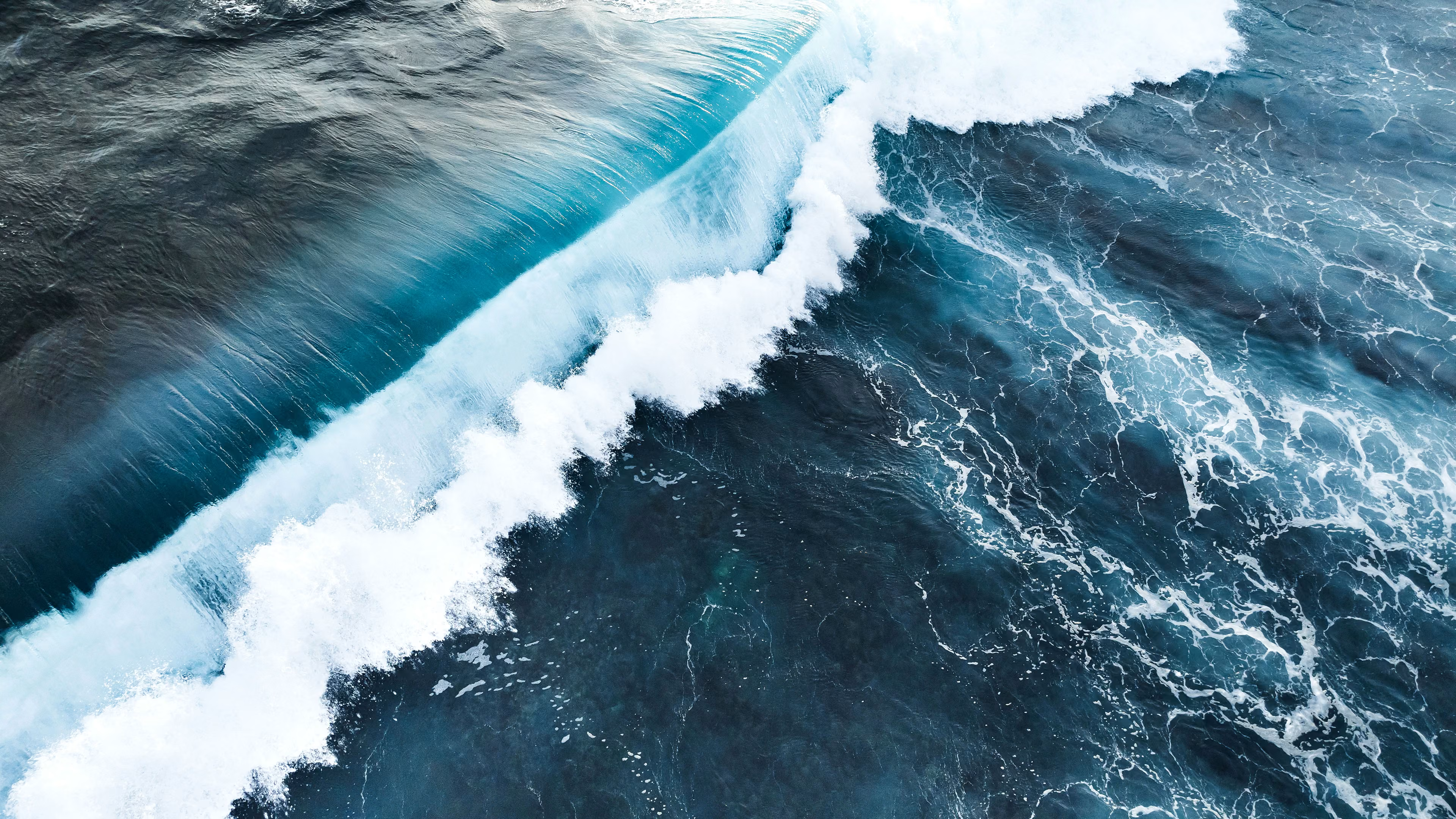
Plunging wave at Uluwatu, Bali
Surf science
On the open ocean, waves move in a rolling, circular motion without much forward force, a bit like a wheel that's not getting enough traction. Breakers like those seen here are what happens when that wheel of energy hits a reef or beach. In shallow water, the rotational force has less vertical space to work with, so horizontal forces are amplified, sending seawater crashing over itself in a mad rush to shore. If a large enough wave approaches the shallows at an angle, it crests and crashes gradually from one end to the other, forming the tubular shape sought by skilled surfers. But if it hits parallel to shore like this one, it crashes all at once in what surfers call a closeout. Which is a total bummer if you're waiting patiently for a perfect ride, but an astounding sight from above.
Breakers like this one occur as big waves from the open ocean collide with beaches or reefs.
© Abstract Aerial Art / Digital Vision / Getty Images 2026-09-11 08:45:51 :