select language: DE-AT
DE-BE
DE-CH
DE-DE
EN-AU
EN-CA
EN-GB
EN-IN
EN-NZ
EN-US
ES-AR
ES-ES
ES-MX
FR-BE
FR-CA
FR-FR
IT-IT
JA-JP
NL-BE
NL-NL
PT-BR
ZH-CN
DE-AT
DE-BE
DE-CH
DE-DE
ES-ES
FR-BE
FR-FR
IT-IT
NL-BE
NL-NL
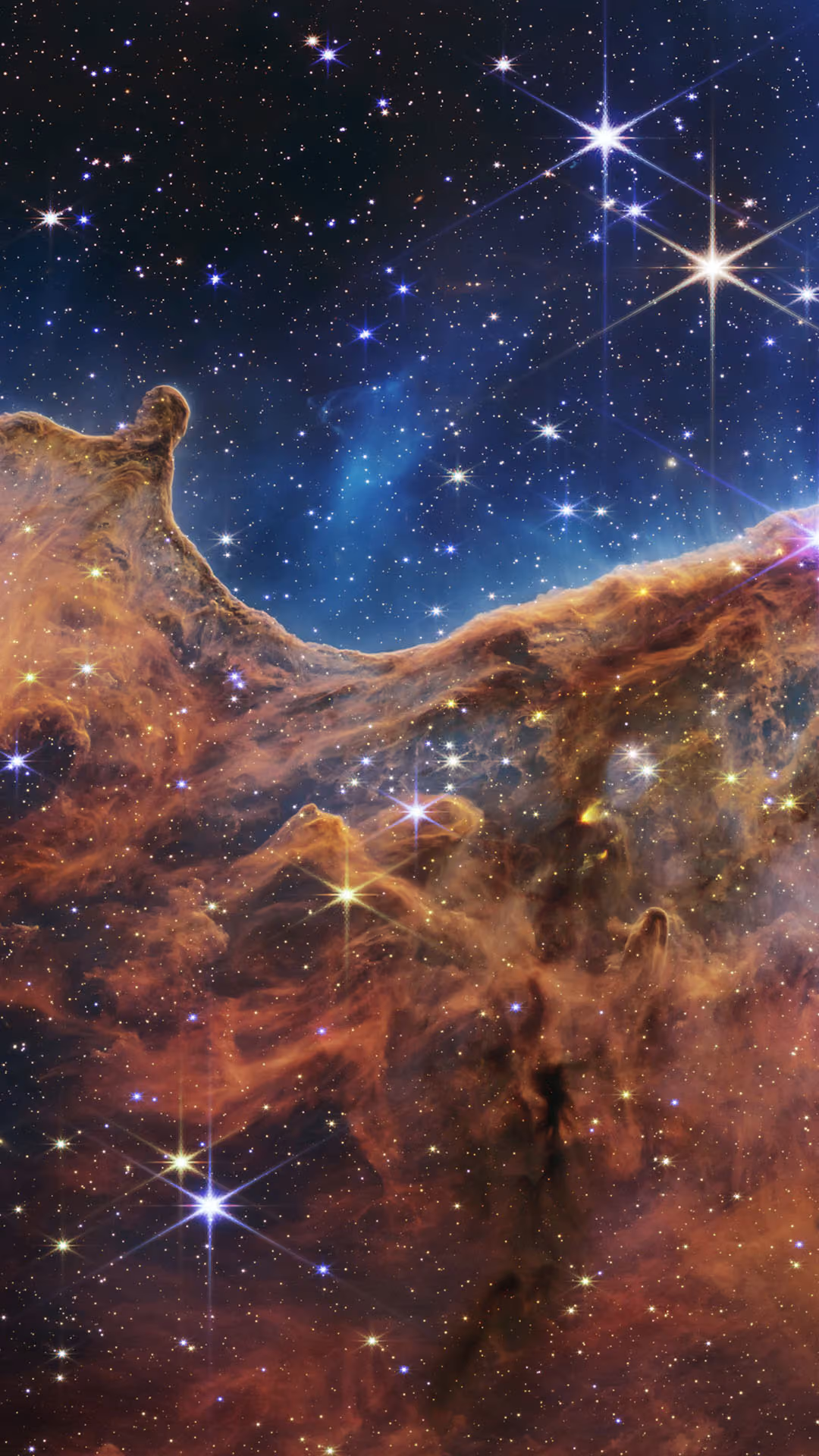
NGC 3324 star cluster as captured by the James Webb Space Telescope
The star factory
Today we're taking you 7,600 light years from Hollywood to show you where stars are really made. The NGC 3324 cluster is a stellar nursery where immense gravitational forces compress cosmic dust and gas into the extremely dense, high-energy objects we call stars. Of course, outside of Star Trek, no human has boldly gone this far into outer space. So how are we seeing these "Cosmic Cliffs" with such clarity? With the help of a really, really good zoom lens – in this case the James Webb Space Telescope. Able to spot young stars emitting infrared light through dense nebulae, NASA's newest imaging satellite captures these never-before-told origin stories.
Aww, how cute – a light-years-long nursery just for baby stars!
© ESA, CSA, and STScI / NASA 2026-09-11 08:45:51 :