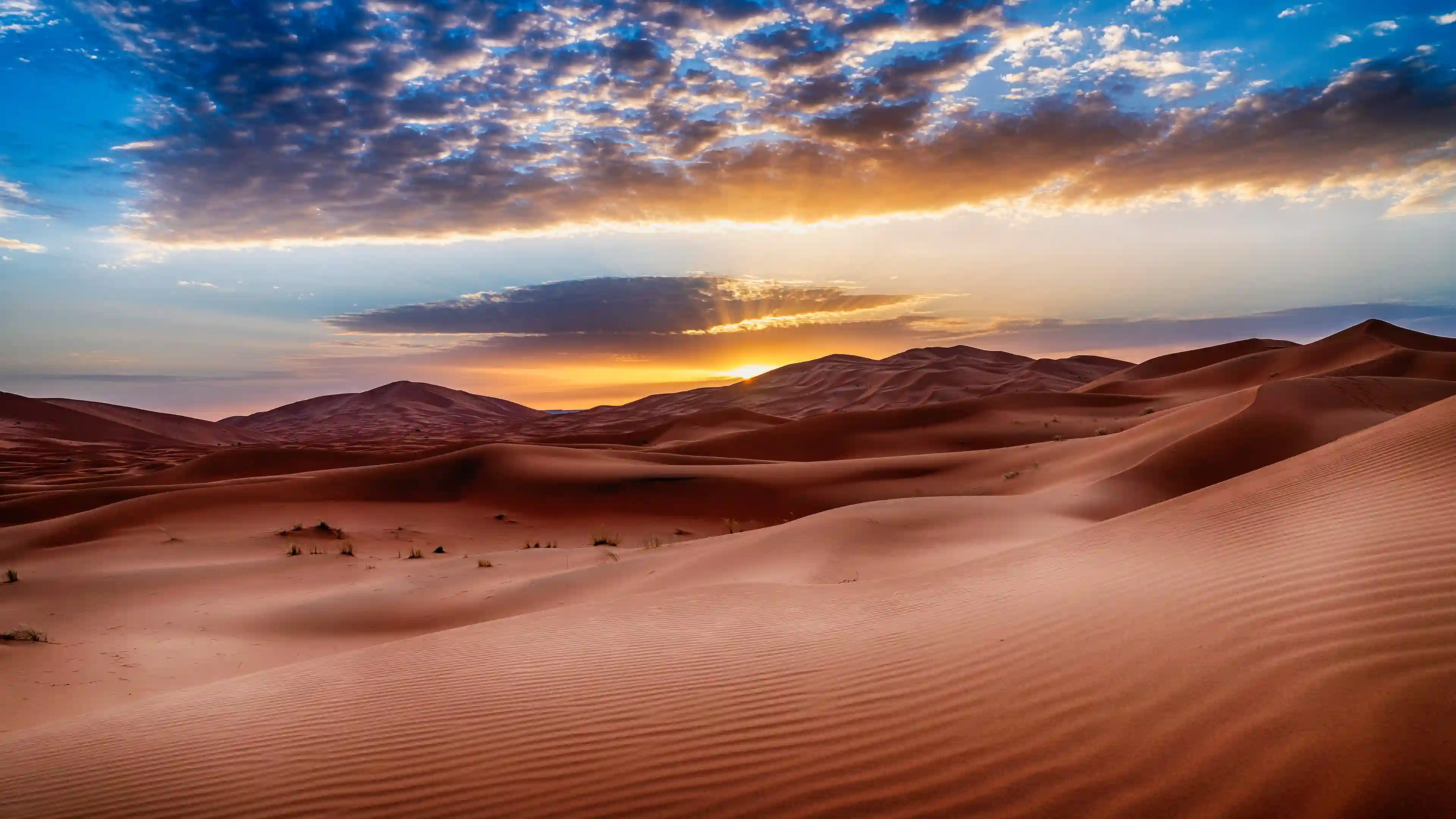
Of dunes and monsoons
A big, barren band nearly the size of the United States stretches from the Atlantic to the Red Sea, bisecting the African continent. Though the sands of the Sahara seem older than time, their present state is younger than human civilization. Until it shifted south as recently as 4,200 BCE, heavy rains still fell on the Sahara—and one day, they will again. As the North African monsoon moves north and south on a cycle with the Earth's axis, it's estimated that in 10 or 15 millennia, the Sahara will start turning greener (though greenhouse gases could slow the process).
A big, barren band nearly the size of the United States stretches from the Atlantic to the Red Sea, bisecting the African continent. Though the sands of the Sahara seem older than time, their present state is younger than human civilization. Until it shifted south as recently as 4,200 BCE, heavy rains still fell on the Sahara—and one day, they will again. As the North African monsoon moves north and south on a cycle with the Earth's axis, it's estimated that in 10 or 15 millennia, the Sahara will start turning greener (though greenhouse gases could slow the process).
This desert crosses 11 countries throughout North Africa, effectively bisecting the whole continent.
© Starcevic / iStock / Getty Images Plus 2026-06-15 11:34:59 :