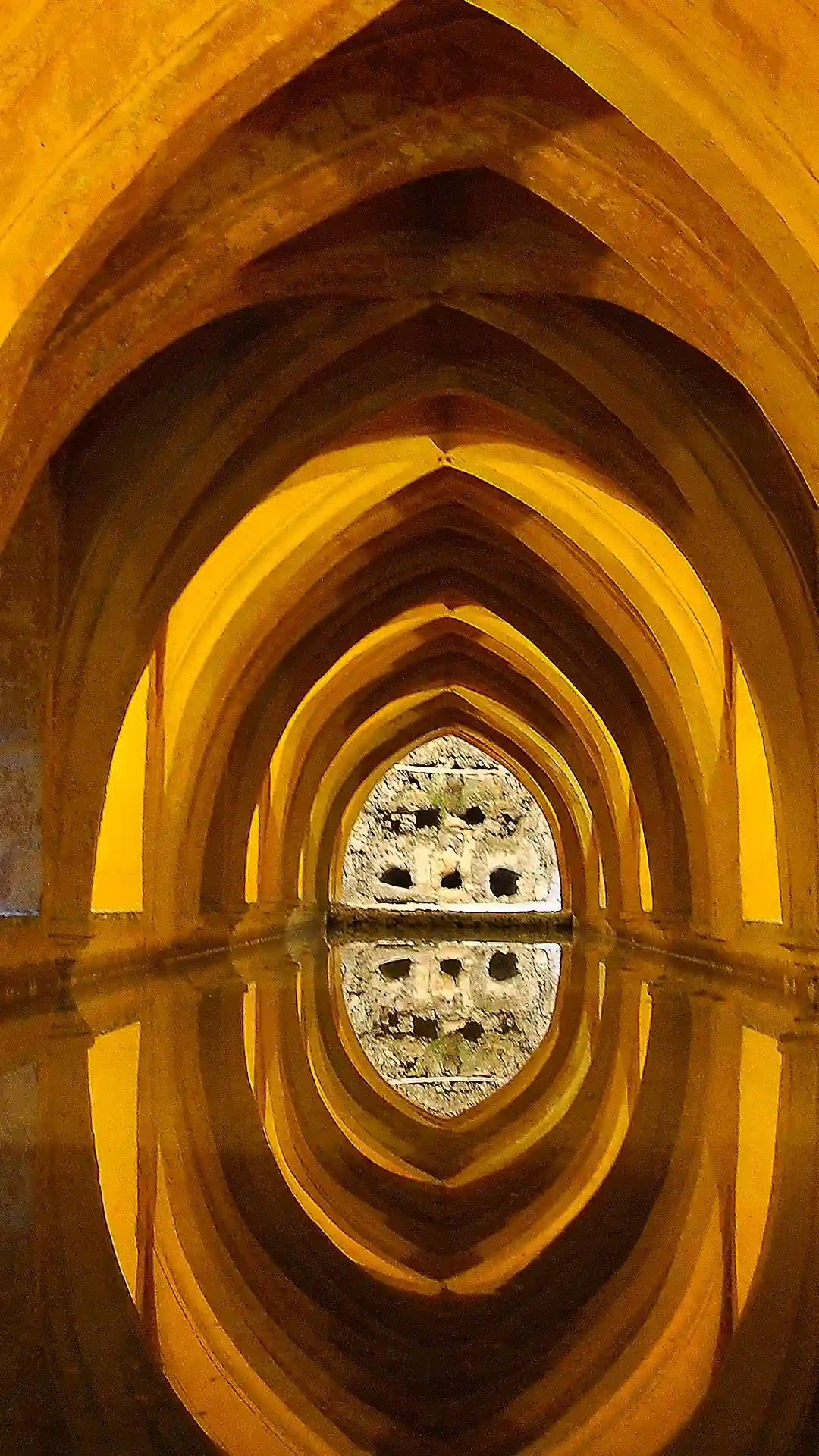
Reflections of history
Construction of the Alcázar of Seville began in 914, and by 1364 the various buildings of this Moorish palace were connected and collected into the complex that's still a royal palace today. The traditional tile and mosaic work, along with some of the buildings, reflect the original Moorish style. But additional buildings show other influences: Tiles and relief carvings depicting animals and people demonstrate the impact of the secular and Catholic populations in Seville after the Moors lost control of Spain in 1492. The subterranean gallery that we see in our image is a series of arches and rainwater tanks built by Peter of Castile in the 14th century and named for his mistress, Lady Maria de Padilla.
Construction of the Alcázar of Seville began in 914, and by 1364 the various buildings of this Moorish palace were connected and collected into the complex that's still a royal palace today. The traditional tile and mosaic work, along with some of the buildings, reflect the original Moorish style. But additional buildings show other influences: Tiles and relief carvings depicting animals and people demonstrate the impact of the secular and Catholic populations in Seville after the Moors lost control of Spain in 1492. The subterranean gallery that we see in our image is a series of arches and rainwater tanks built by Peter of Castile in the 14th century and named for his mistress, Lady Maria de Padilla.
Early construction on this castle began in 914, and its upper levels are still used as a royal residence.
© Imagining Dreams / Moment / Getty Images 2026-06-15 11:34:59 :