select language: DE-AT
DE-BE
DE-CH
DE-DE
EN-AU
EN-CA
EN-GB
EN-IN
EN-NZ
EN-US
ES-AR
ES-ES
ES-MX
FR-BE
FR-CA
FR-FR
IT-IT
JA-JP
NL-BE
NL-NL
PT-BR
ZH-CN
DE-AT
DE-BE
DE-CH
DE-DE
ES-ES
FR-BE
FR-FR
IT-IT
NL-BE
NL-NL
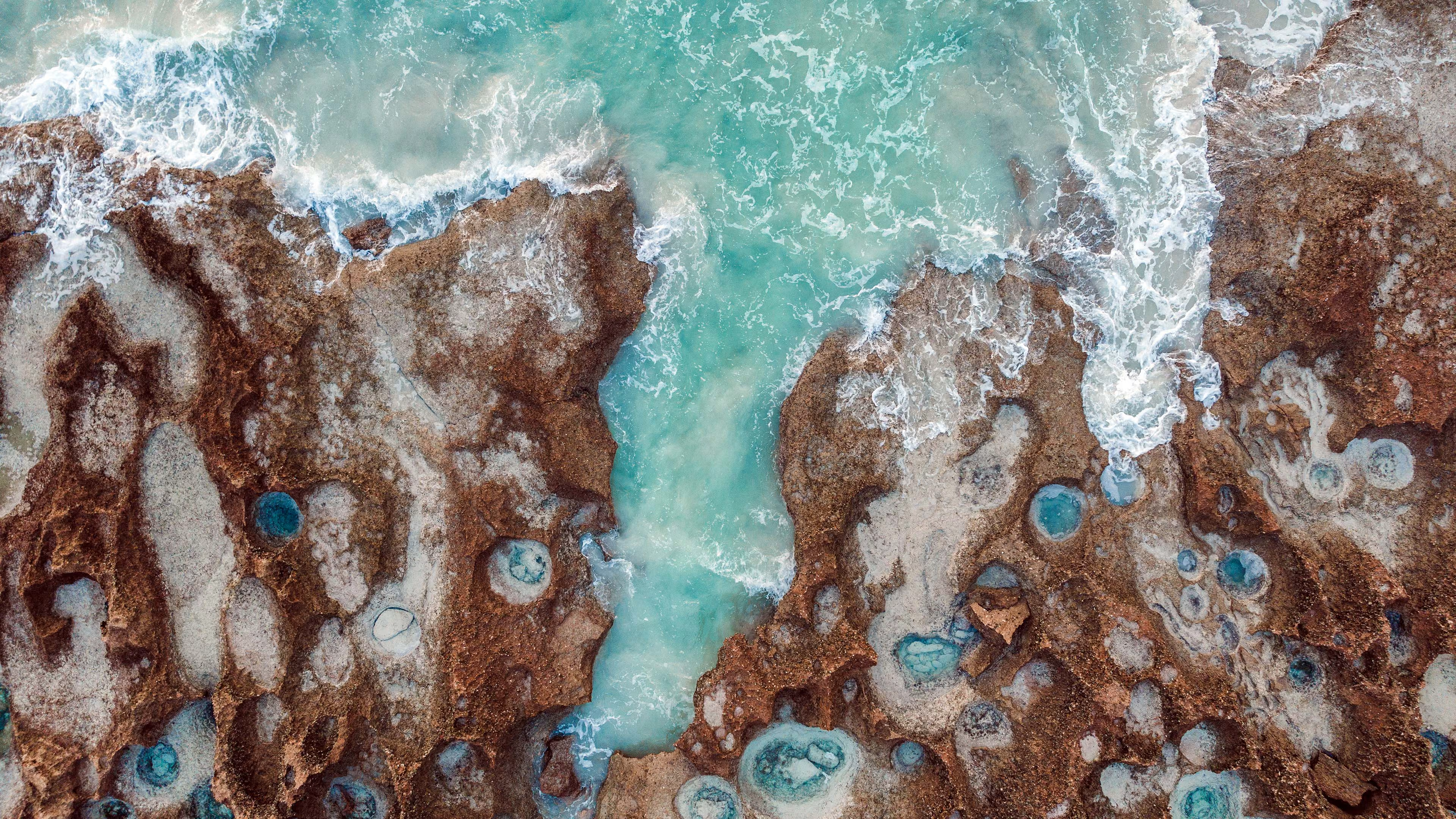
The Kimberley, Western Australia
Turquoise tide
Here in Western Australia's Kimberley region, turquoise waters meet ancient rock formations, some over 1.8 billion years old. The circular pools scattered across this craggy surface were formed by the relentless action of waves and weather over millennia. The Kimberley is known for its dramatic tides – some of the largest in the world at almost 12 metres – which shape the coastline daily. These waters also support a rich marine ecosystem, including dugongs, sea turtles, humpback whales and fish by the school. On land, the Kimberley is a lot less crowded – it's home to only about 34,000 people in an expanse the size of the US state of California, with vast areas of wilderness accessible only by boat or small aircraft.
© Abstract Aerial Art / Digital Vision / Getty Images 2026-09-11 08:45:52 :