select language: DE-DE
ES-ES
FR-FR
IT-IT
JA-JP
PT-BR
ZH-CN
NL-NL
DE-AT
DE-BE
DE-CH
DE-DE
EN-AU
EN-CA
EN-GB
EN-IN
EN-NZ
EN-US
ES-AR
ES-ES
ES-MX
FR-BE
FR-CA
FR-FR
IT-IT
JA-JP
NL-BE
NL-NL
PT-BR
ZH-CN
DE-AT
DE-BE
DE-CH
DE-DE
ES-ES
FR-BE
FR-FR
IT-IT
NL-BE
NL-NL
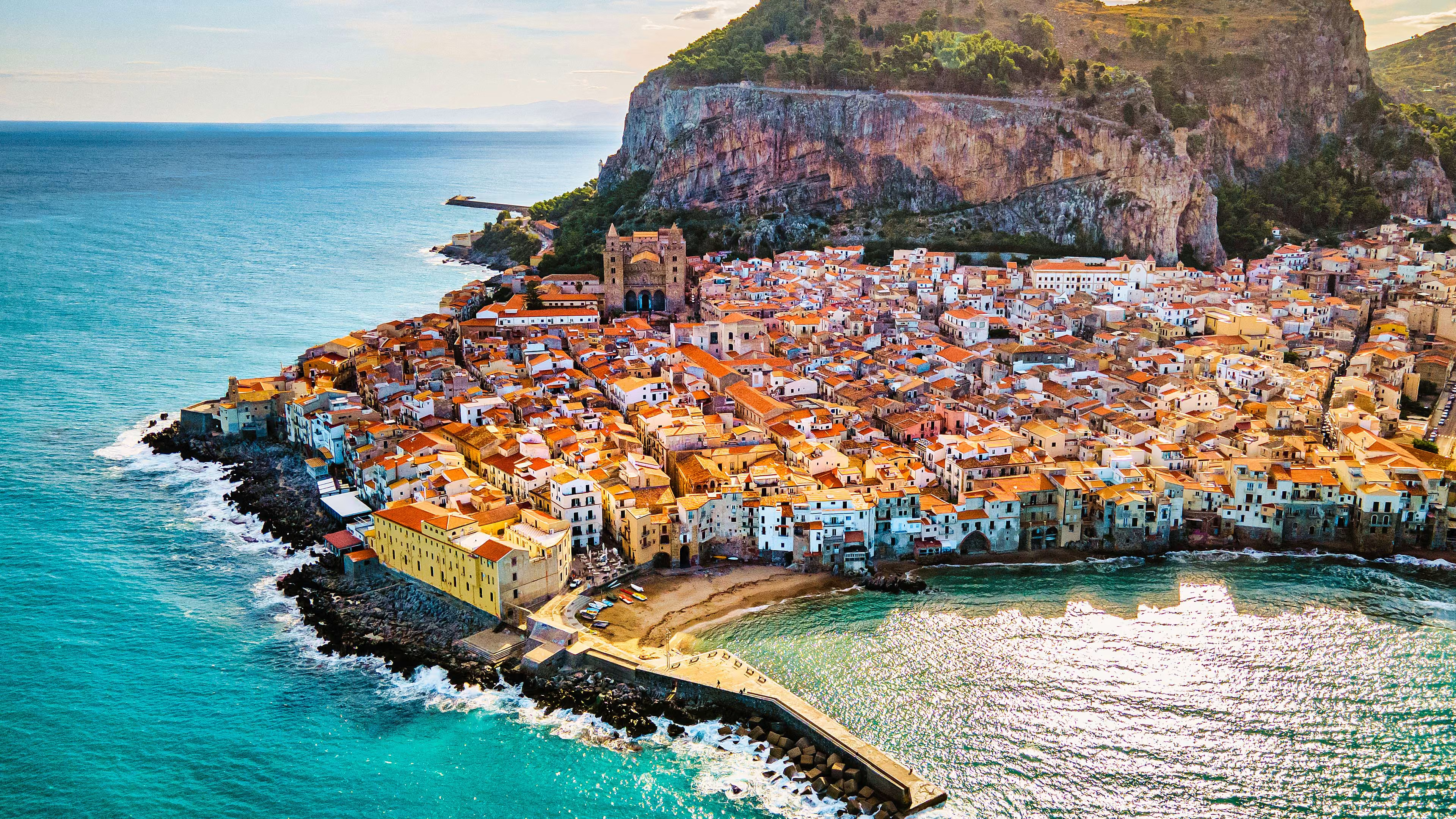
Cefalù, Italy
Compact and charming
The cramped cityscape of Cefalù, Sicily, is defined by two dominating profiles. On a massive scale, it's the 270-metre Rock of Cefalù, and on a smaller one, the dual-steepled Cefalù Cathedral (near our photo's centre). The cathedral dates back to 1131, when King Roger II ordered the settlement be moved from on top of the rock – where the ancient Greeks had founded it – to the harbour below. The building of the cathedral began that same year, exhibiting a style reflecting Roger II's Norman roots. Inside, several colourful Byzantine mosaics remain well-preserved.
The ancient Greeks founded this Italian city atop its iconic rock, but it was later moved down to sea level.
© Pol Albarrán / Moment / Getty Images 2026-09-11 08:45:51 :