select language: DE-AT
DE-BE
DE-CH
DE-DE
EN-AU
EN-CA
EN-GB
EN-IN
EN-NZ
EN-US
ES-AR
ES-ES
ES-MX
FR-BE
FR-CA
FR-FR
IT-IT
JA-JP
NL-BE
NL-NL
PT-BR
ZH-CN
DE-AT
DE-BE
DE-CH
DE-DE
ES-ES
FR-BE
FR-FR
IT-IT
NL-BE
NL-NL
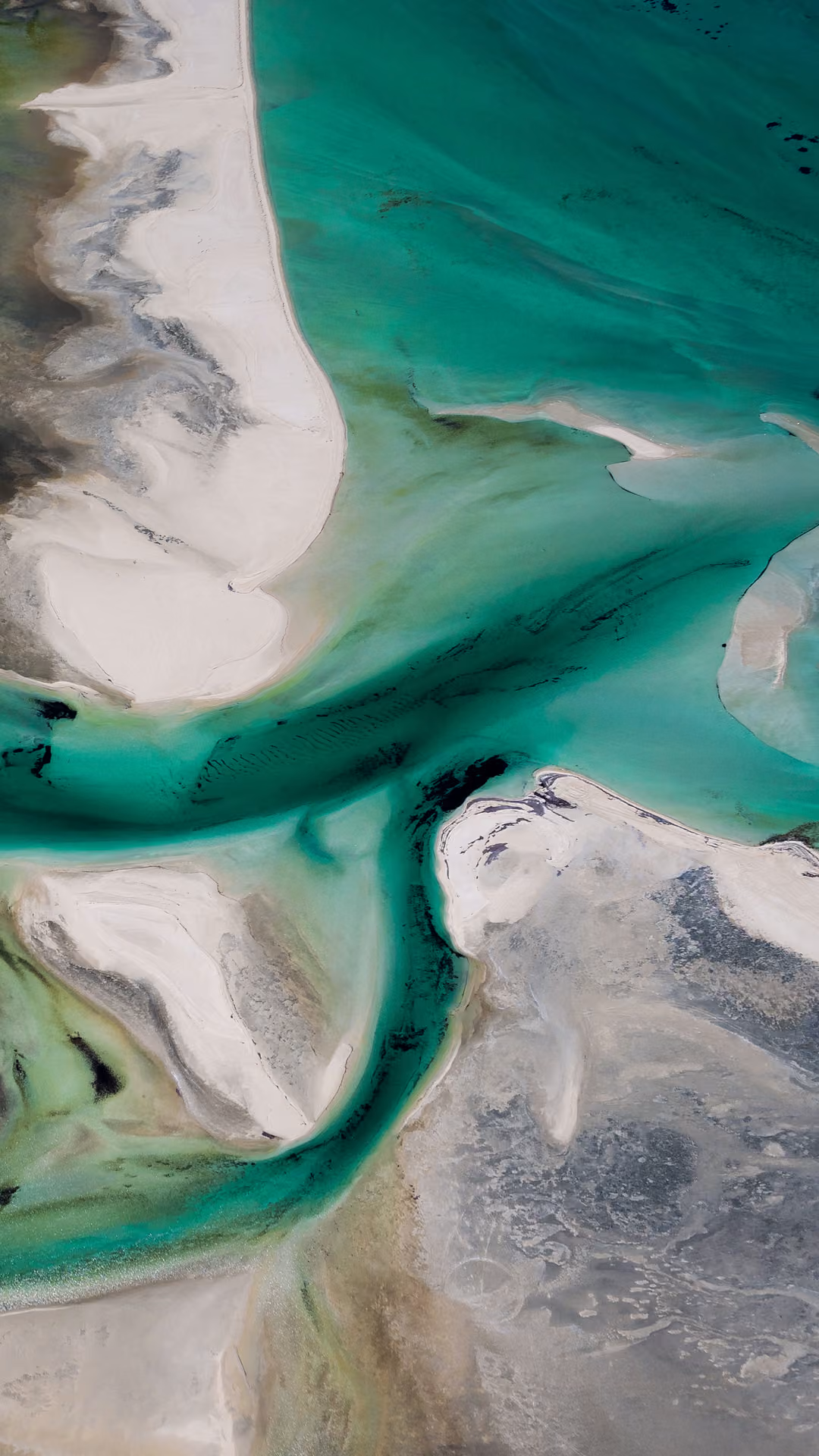
Shark Bay, Western Australia
A brush-stroke bay
Whilst this might look like a masterpiece from New York's Museum of Modern Art, we're actually on the opposite side of the world from it. Our aerial shot shows Shark Bay, the westernmost point in Australia – a spot known not only for its 28 species of sharks, but also for two other lifeforms of interest. One is the dugong, or sea cow, a cousin to the manatee that numbers more than 10,000 within the bay. The other is less cute (not to mention less alive) but perhaps even more fascinating; layered microbial fossils called stromatolites – the remains of some of the oldest known organisms – dot the shallows of the bay.
The picturesque westernmost point of Australia hosts heaps of biodiversity.
© Maico Presente / Moment / Getty Images 2026-09-11 08:45:51 :