select language: DE-DE
ES-ES
FR-FR
IT-IT
JA-JP
PT-BR
ZH-CN
NL-NL
DE-AT
DE-BE
DE-CH
DE-DE
EN-AU
EN-CA
EN-GB
EN-IN
EN-NZ
EN-US
ES-AR
ES-ES
ES-MX
FR-BE
FR-CA
FR-FR
IT-IT
JA-JP
NL-BE
NL-NL
PT-BR
ZH-CN
DE-AT
DE-BE
DE-CH
DE-DE
ES-ES
FR-BE
FR-FR
IT-IT
NL-BE
NL-NL
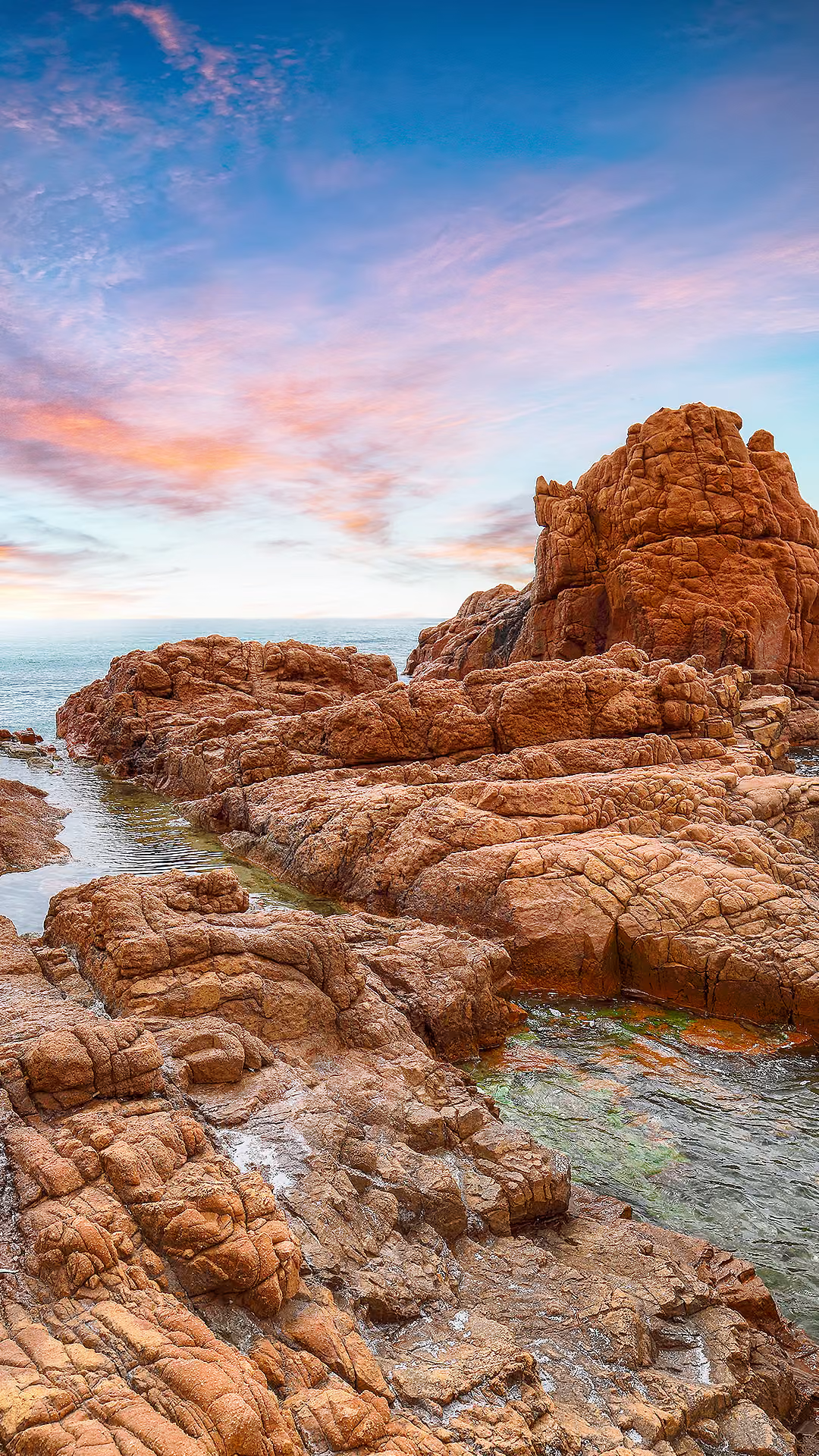
Cea Beach, Ogliastra, Italy
Sardinian seaside
Most of Cea Beach is a long, wide stretch of soft white Sardinian sand, but one area stands out, both figuratively and literally. Stretching into the Mediterranean Sea is a line of furrowed and saw-toothed red rocks that are irresistible to beachgoers, photographers and geologists in equal measure. The rocks here are porphyry, a type of course-grained granite typically found in a purple or reddish hue. It's also relatively easy for the forces of nature to mark and score, so any group of these stacks near the surf usually end up looking like a collection of Neptune's amateur sculptures.
Thanks to its turbulent geological past, Sardinia's shores are full of rugged, rocky scenes like this.
© Pilat666 / iStock / Getty Images Plus 2026-09-11 08:45:51 :