select language: DE-AT
DE-BE
DE-CH
DE-DE
EN-AU
EN-CA
EN-GB
EN-IN
EN-NZ
EN-US
ES-AR
ES-ES
ES-MX
FR-BE
FR-CA
FR-FR
IT-IT
JA-JP
NL-BE
NL-NL
PT-BR
ZH-CN
DE-AT
DE-BE
DE-CH
DE-DE
ES-ES
FR-BE
FR-FR
IT-IT
NL-BE
NL-NL
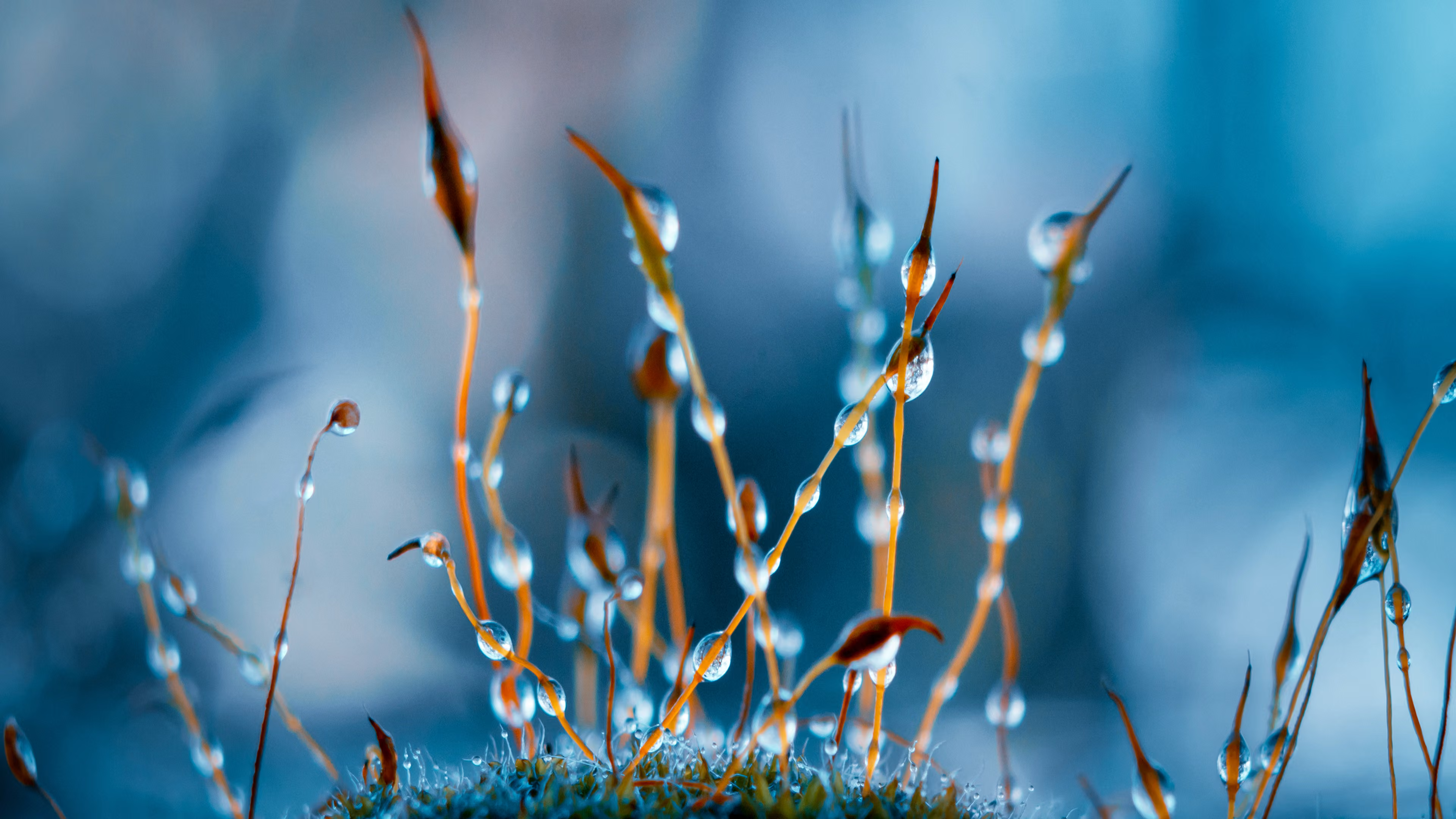
Dewdrops on grass
Let's drop some facts
What causes dewdrops like the ones in this macro photo to form? It's all relative, as in relative humidity – the ratio of how much moisture is in the air versus how much it's able to hold at a given temperature. That may sound complex, but think of it this way – when the air is cool (say at night), it can hold less moisture before it's 'full', or has reached the dew point. That moisture has to go somewhere and a lawnful of grass has a nice, big surface area, so that's where a lot of the excess water winds up. As daylight heats the air, it'll be able to take on more moisture through evaporation, putting a damper on the dampness.
How does nature dew it? We're happy to explain.
© Iro Kiorapostolou / 500px / Getty Images 2026-09-11 08:45:51 :