select language: DE-DE
EN-AU
EN-CA
EN-GB
EN-IN
EN-NZ
EN-US
ES-AR
ES-ES
ES-MX
FR-CA
FR-FR
IT-IT
JA-JP
NL-NL
PT-BR
ZH-CN
DE-AT
DE-BE
DE-CH
DE-DE
ES-ES
FR-BE
FR-FR
IT-IT
NL-BE
NL-NL
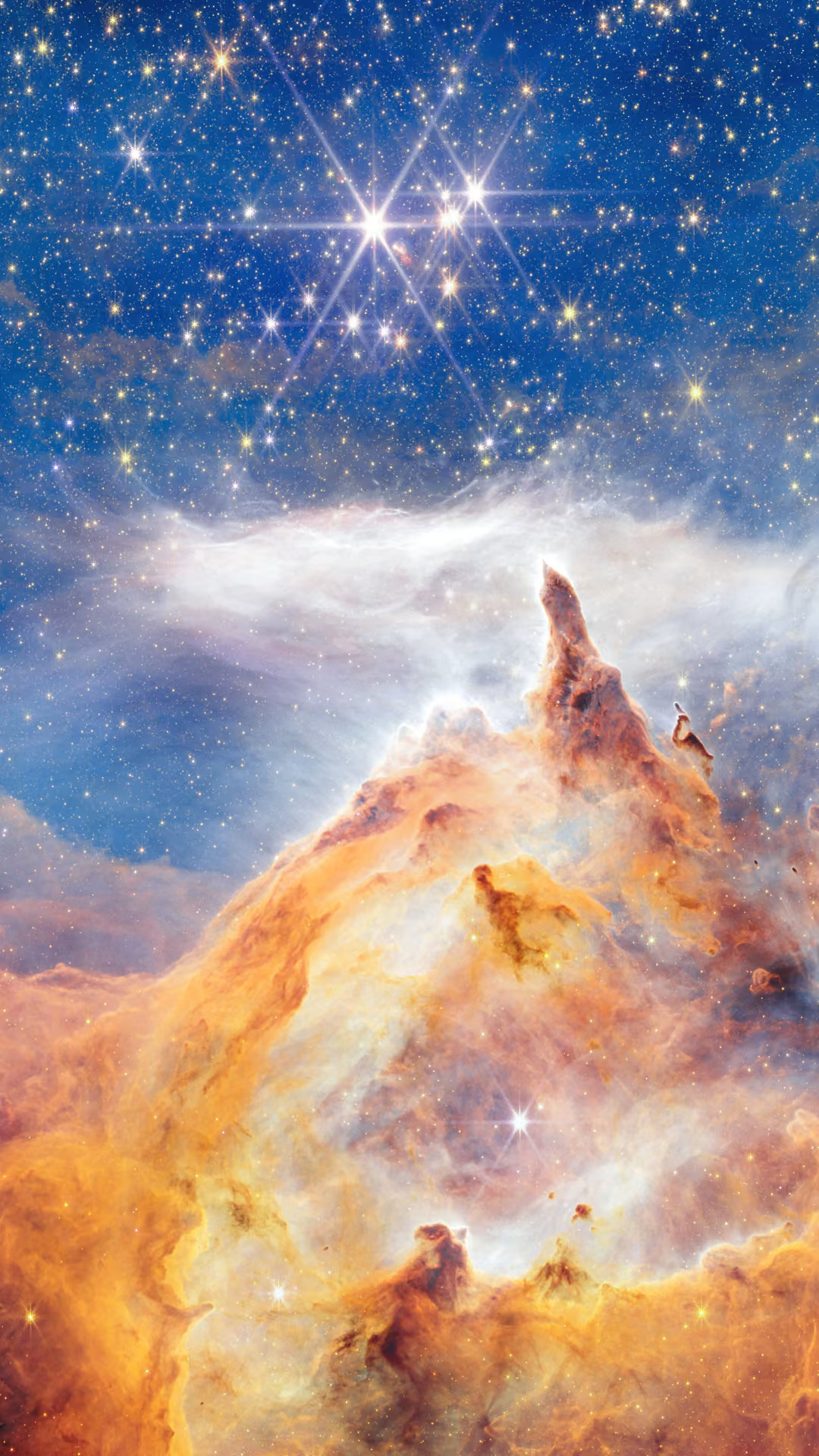
Lobster Nebula
Stars in a pinch
From a wider perspective, the Lobster Nebula indeed looks like an astronomically-sized arthropod claw, but a zoomed-up view of this space crustacean reveals complexity we've only begun to comprehend. The numberless twinkles in our image belong to newborn stars of the open cluster Pismis 24, a stellar nursery hosting some of the heaviest and highest-intensity stars we know of. Pismis 24-1, seen here at low centre, is the most massive star in the cluster. Once considered the largest known star, it was later found to be multiple stars – each still dozens of times bigger and brighter than the Sun.
© NASA, ESA, CSA, and STScI Image Processing: M. Garcia Marin, A. Pagan (STScI) 2026-09-11 08:45:52 :