select language: DE-AT
DE-BE
DE-CH
DE-DE
EN-AU
EN-CA
EN-GB
EN-IN
EN-NZ
EN-US
ES-AR
ES-ES
ES-MX
FR-BE
FR-CA
FR-FR
IT-IT
JA-JP
NL-BE
NL-NL
PT-BR
ZH-CN
DE-AT
DE-BE
DE-CH
DE-DE
ES-ES
FR-BE
FR-FR
IT-IT
NL-BE
NL-NL
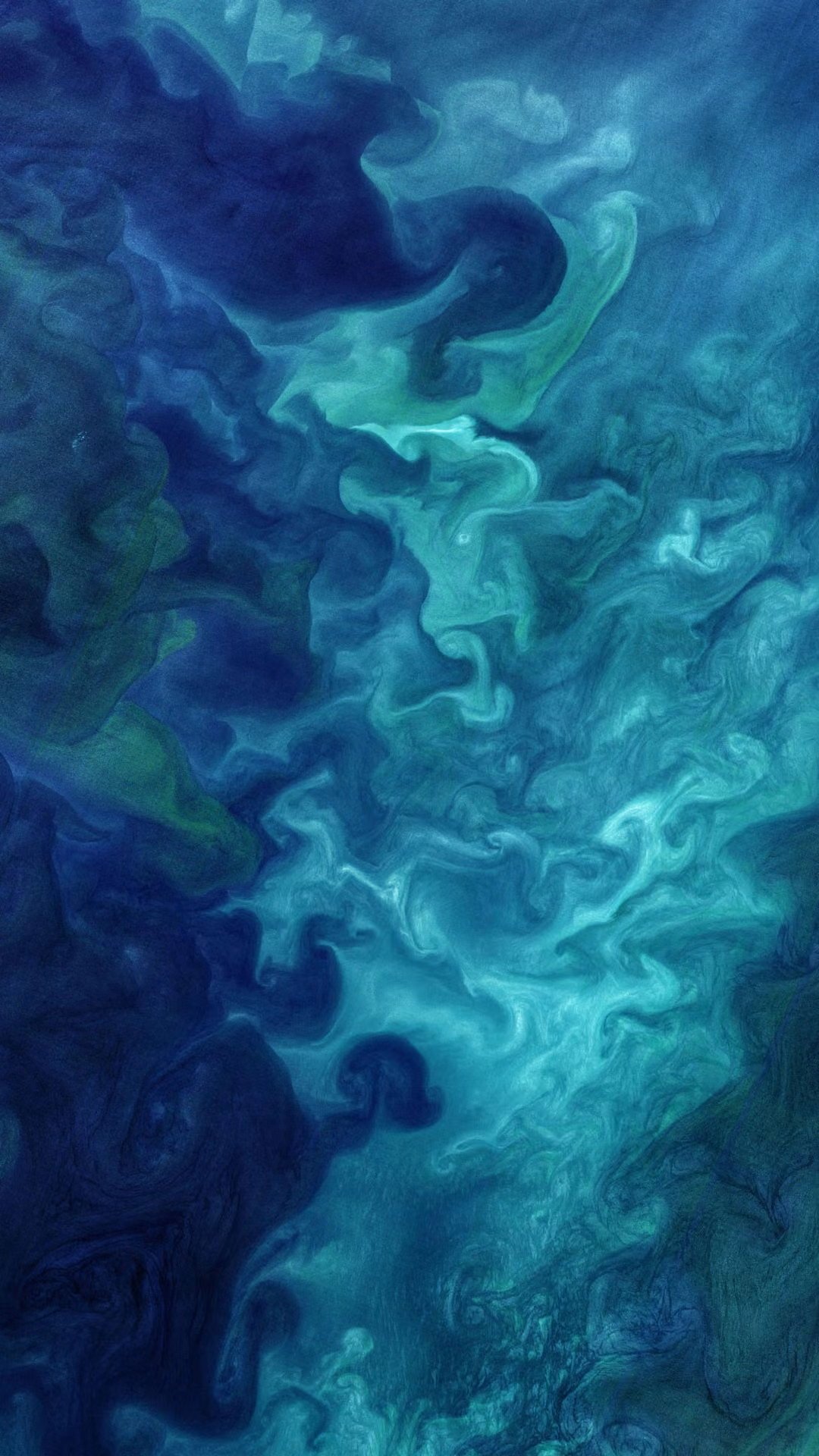
Diatom and plankton blooms in the Chukchi Sea off the coast of Alaska, USA
Swirling seas
From electron microscopes to high-definition satellite photography, technology has opened our eyes to once-impossible perspectives of nature. So, is what we're seeing really big or really tiny?A bit of both, actually. In this aerial image snapped by Landsat 8 of the colossal Chukchi Sea off northern Alaska, the watery whorls show the mingling of two different water sources, the Alaskan coast and the larger Bering Sea. The photo's forest-green blotches are full of microscopic diatoms fuelled by frigid yet food-rich Bering currents. The intercutting wisps of icy turquoise are the calcified carapaces of coccolithophores – plankton that can thrive in warmer, nutrient-poor coastal waters.
Even microscopic organisms can get together and create something really, really big.
© US Geological Survey / Norman Kuring / Kathryn Hansen / NASA 2026-09-11 08:45:51 :