select language: DE-DE
EN-AU
EN-CA
EN-GB
EN-IN
EN-NZ
EN-US
ES-AR
ES-ES
ES-MX
FR-CA
FR-FR
IT-IT
JA-JP
NL-NL
PT-BR
ZH-CN
DE-AT
DE-BE
DE-CH
DE-DE
ES-ES
FR-BE
FR-FR
IT-IT
NL-BE
NL-NL
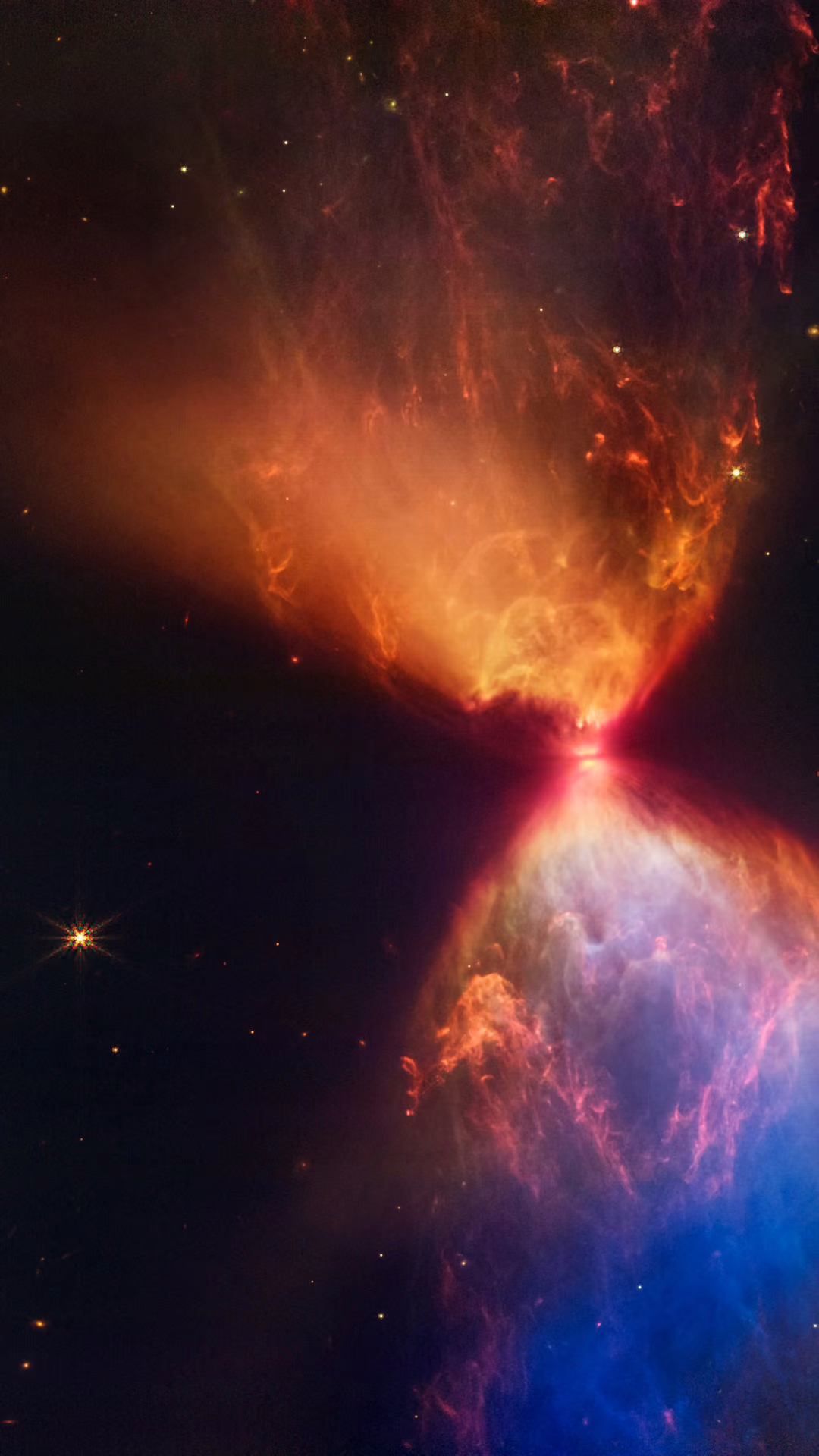
Protostar L1527
Feeding a future sun?
Some say stars are born, not made – and while that may apply to showbiz, in space it's a bit more complicated. Star formation is a long process of accumulating material bit by bit, condensing molecular clouds into extremely dense clumps that finally collapse into a protostar. This near-infrared image from the James Webb Space Telescope is centred on protostar L1527, showing the nebulous matter it's drawing in from multiple directions via gravity – "feeding" on the gases and dust to grow larger. You may need to squint to see it, but that darker line bisecting the brightest point of the protostar is a protoplanetary disk – a ring of orbiting matter that could be the beginnings of a new planetary system.
© NASA, ESA, CSA, STScI 2026-09-11 08:45:52 :