select language: DE-DE
EN-AU
EN-CA
EN-GB
EN-IN
EN-NZ
EN-US
ES-AR
ES-ES
ES-MX
FR-CA
FR-FR
IT-IT
JA-JP
PT-BR
ZH-CN
DE-AT
DE-BE
DE-CH
DE-DE
ES-ES
FR-BE
FR-FR
IT-IT
NL-BE
NL-NL
DE-AT
DE-BE
DE-CH
DE-DE
ES-ES
FR-BE
FR-FR
IT-IT
NL-BE
NL-NL
DE-AT
DE-BE
DE-CH
DE-DE
EN-AU
EN-CA
EN-GB
EN-IN
EN-NZ
EN-US
ES-AR
ES-ES
ES-MX
FR-BE
FR-CA
FR-FR
IT-IT
JA-JP
NL-BE
NL-NL
PT-BR
ZH-CN
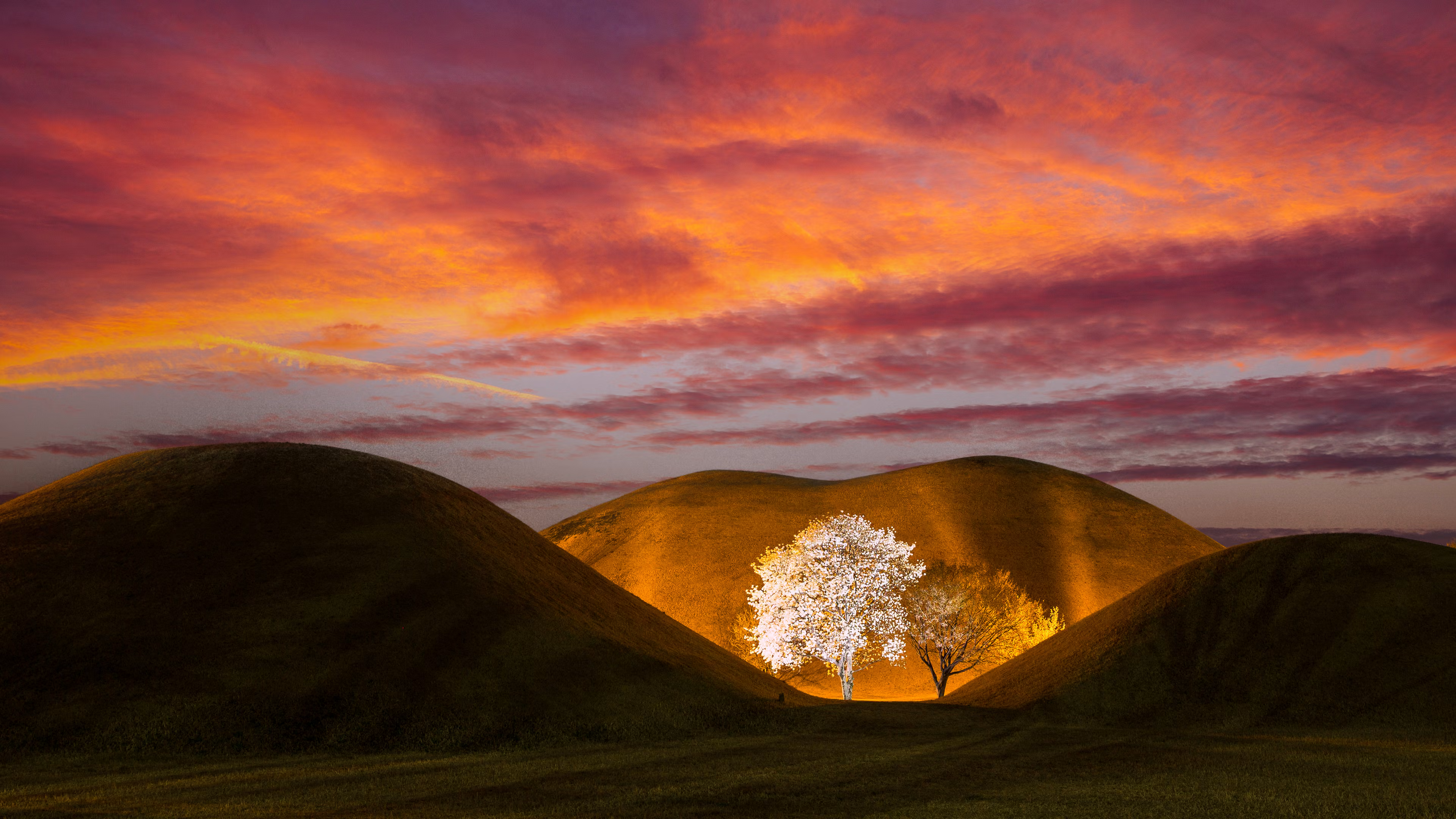
Daereungwon tombs, Gyeongju, South Korea
A museum without walls""
The Korean city of Gyeongju is renowned for the well-preserved history that permeates it. These rolling landforms are all exhibits in themselves – they're not natural hills but built-up burial mounds called tumuli. Each tumulus hosts the remains of royalty from the ancient Silla kingdom that ruled much of the Korean peninsula for about a millennium, from 57 BCE to 935 CE. Almost two dozen of these tombs make up the Daereungwon complex nestled within modern Gyeongju.
These rolling hills are actually man-made mounds, built as tombs for ancient royalty.
© Insung Jeon / Moment / Getty Images 2026-09-11 08:45:51 :