select language: DE-AT
DE-BE
DE-CH
DE-DE
EN-AU
EN-CA
EN-GB
EN-IN
EN-NZ
EN-US
ES-AR
ES-ES
ES-MX
FR-BE
FR-CA
FR-FR
IT-IT
JA-JP
NL-BE
NL-NL
PT-BR
ZH-CN
DE-AT
DE-BE
DE-CH
DE-DE
ES-ES
FR-BE
FR-FR
IT-IT
NL-BE
NL-NL
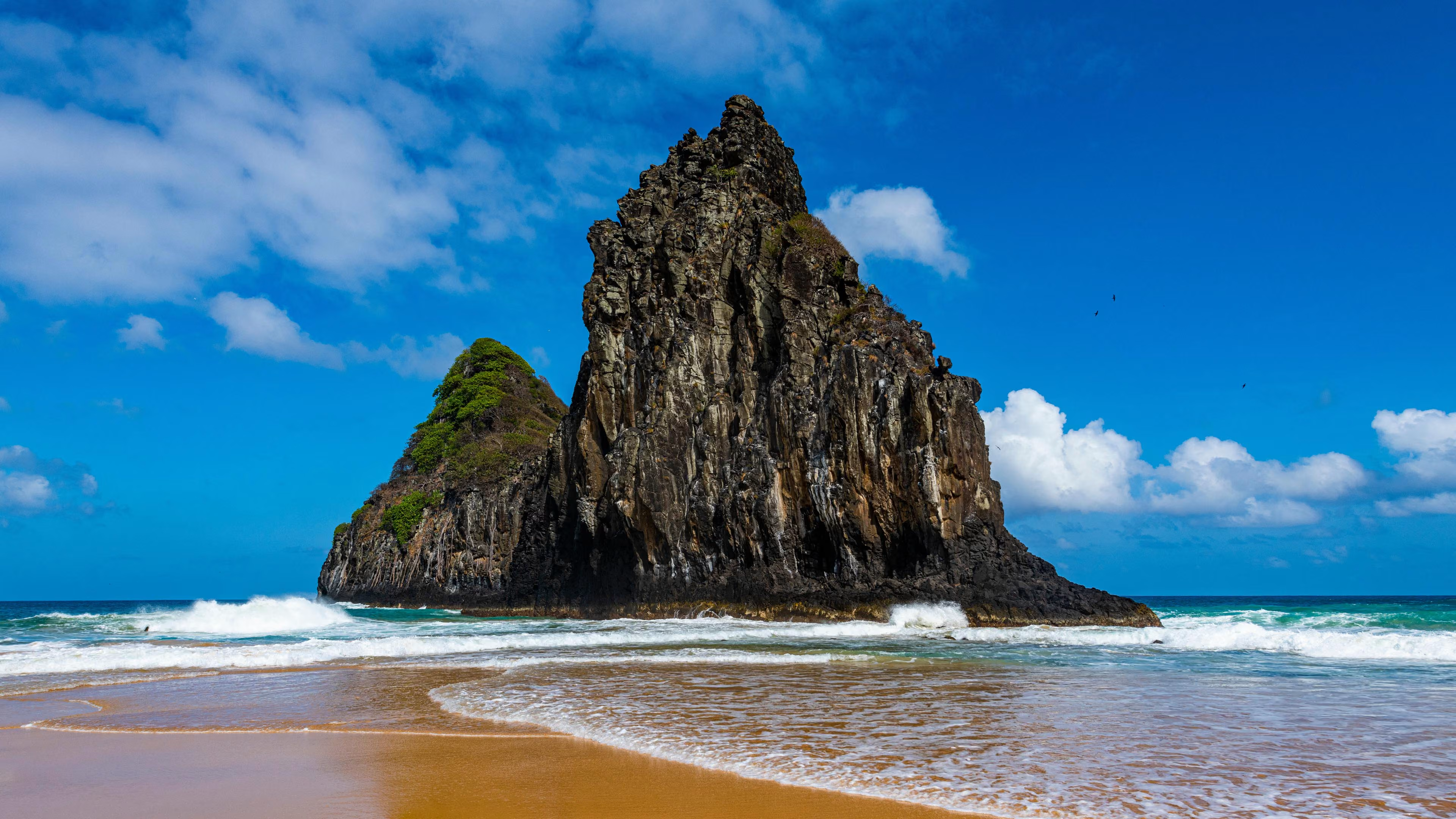
Two Brothers sea stacks in Fernando de Noronha, Brazil
A distinctive duo
Dramatic volcanic features like these twin sea stacks, known as Two Brothers Rock, make this archipelago easy to spot from afar – a lucky thing, given how out-of-the-way it is. Lying around 350 kilometres from the Brazilian mainland, the main island of the Fernando de Noronha group is the only inhabited one in the small chain. Despite its tiny size (around 25 square kilometres), it's jam-packed with rugged terrain and relaxing beaches alike. Even more treasured is what surrounds the isle. In 2001, UNESCO declared Fernando de Noronha a World Heritage Site to protect the thriving sea life that feeds here.
Controlled by the continent's largest country, these isles are quite a journey from the South American mainland.
© robertharding / Adobe Stock 2026-09-11 08:45:51 :