select language: DE-AT
DE-BE
DE-CH
DE-DE
EN-AU
EN-CA
EN-GB
EN-IN
EN-NZ
EN-US
ES-AR
ES-ES
ES-MX
FR-BE
FR-CA
FR-FR
IT-IT
JA-JP
NL-BE
NL-NL
PT-BR
ZH-CN
DE-AT
DE-BE
DE-CH
DE-DE
ES-ES
FR-BE
FR-FR
IT-IT
NL-BE
NL-NL
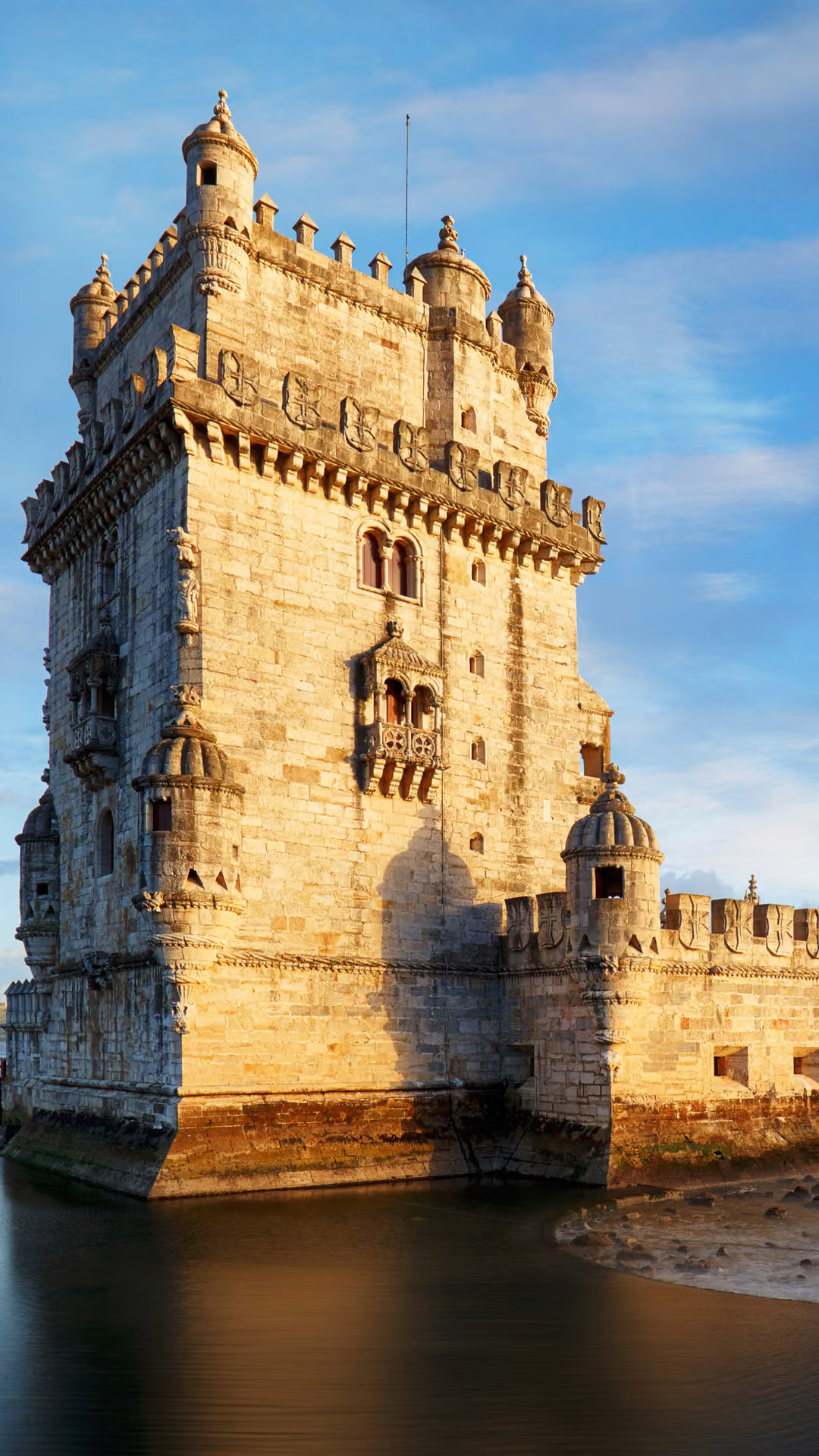
Belém Tower in Lisbon, Portugal
A past empire's bastion
Given its modern reputation as a laid-back land where wines are savoured and waves are surfed, it's hard to fathom Portugal's past as a world-spanning militaristic empire. But the proof is set in stone (local lioz limestone to be exact) all over this Iberian nation. Take Belém Tower for example—an important instance (along with nearby Jerónimos Monastery) of the prevailing Manueline architecture style of early 16th-century Portugal. Manueline designs tended to reflect the nation's then-newfound status as a global naval power, cribbing motifs from cultures across the globe and blending them into an ornate, essentially Gothic style. A crucial fortification through centuries of war with rivals like the Spanish, French and Dutch, Belém Tower still stands vigil at the gateway to Lisbon's harbour.
Belém Tower was once a key defensive structure here in Portugal's capital city.
© TTstudio/ Shutterstock 2026-09-11 08:45:51 :