select language: DE-AT
DE-BE
DE-CH
DE-DE
EN-AU
EN-CA
EN-GB
EN-IN
EN-NZ
EN-US
ES-AR
ES-ES
ES-MX
FR-BE
FR-CA
FR-FR
IT-IT
JA-JP
NL-BE
NL-NL
PT-BR
ZH-CN
DE-AT
DE-BE
DE-CH
DE-DE
ES-ES
FR-BE
FR-FR
IT-IT
NL-BE
NL-NL
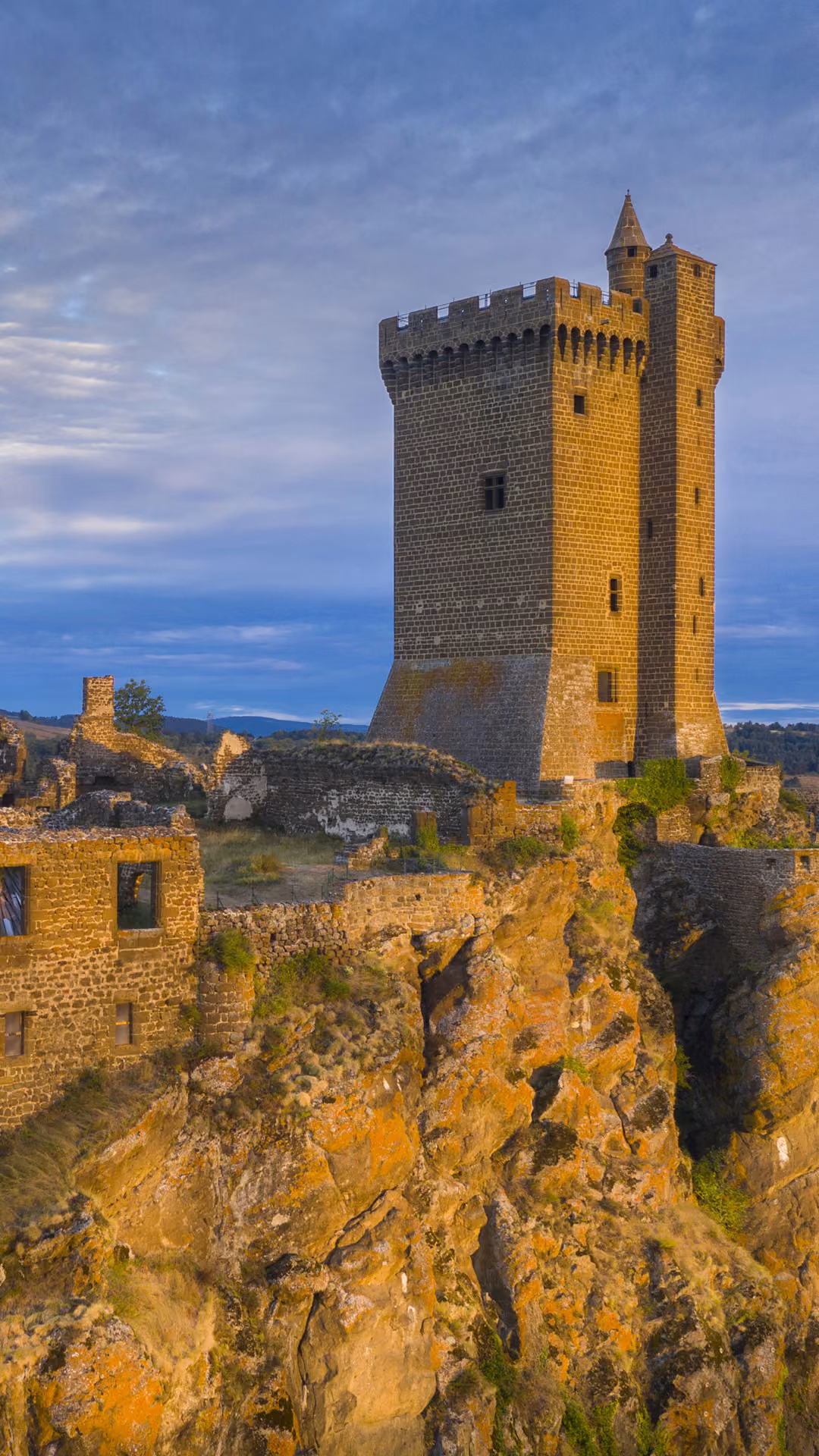
Fortress of Polignac, France
Château on the plateau
From a distance, the Fortress of Polignac seems to sprout from an impossibly huge tree stump. Rather than a petrified hunk of trunk, this plateau is actually a stout column of volcanic basalt that, from the 10th century onwards, has hosted a series of keeps. Before the Polignac noble family seized the spot, wooden structures defended this high position. By the 14th century, the Polignacs had converted it into a stone compound with a 32-metre tower, dominating the village skyline to this day. Additions continued until the nobility met its fate in the French Revolution, after which the once-proud palace was quarried for its stone blocks. A few decades later, the Polignacs managed to buy it back, partly restoring the ruin before its designation as a historic monument.
© Massimo Ripani / Sime / eStock 2026-09-11 08:45:52 :