select language: DE-AT
DE-BE
DE-CH
DE-DE
EN-AU
EN-CA
EN-GB
EN-IN
EN-NZ
EN-US
ES-AR
ES-ES
ES-MX
FR-BE
FR-CA
FR-FR
IT-IT
JA-JP
NL-BE
NL-NL
PT-BR
ZH-CN
DE-AT
DE-BE
DE-CH
DE-DE
ES-ES
FR-BE
FR-FR
IT-IT
NL-BE
NL-NL
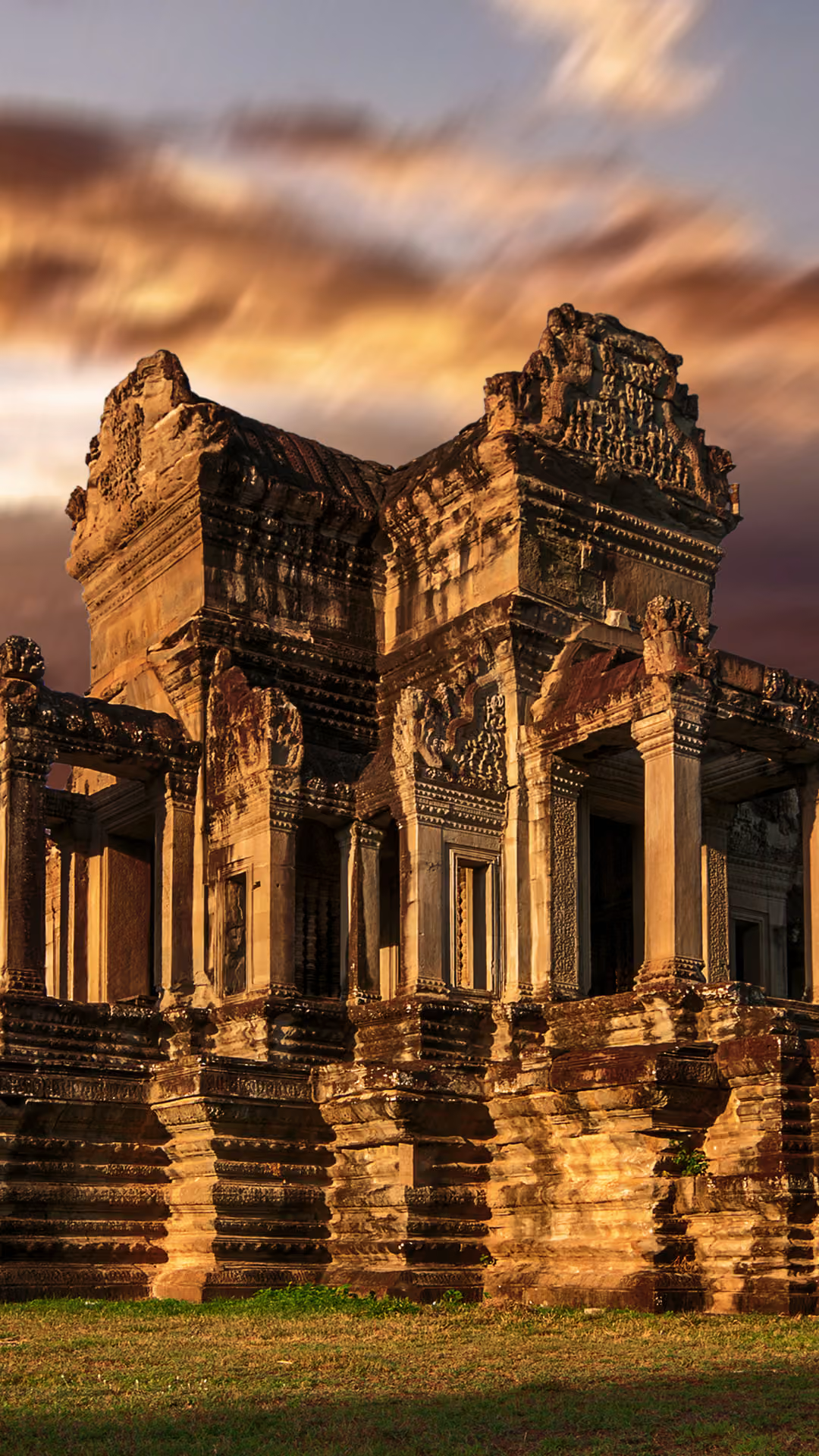
Angkor Wat, Cambodia
Stories etched in stone
Angkor Wat has been an important Buddhist centre through most of its nearly 900-year history, so why is it covered in stone-carved scenes of Hindu mythology? The complex was built in 1150 CE under king Suryavarman II, a devotee of the Khmer Empire's traditional Hinduism. Within just a few decades – two kings and an enemy invasion later – the new Buddhist monarch Jayavarman VII began rededicating the temple to his own religion. Though some Hindu elements were removed, many remain – Bas-reliefs depict multitudes of apsaras and other Hindu figures, covering more than 1,115 square metres of the structure.
© Artie Photography (Artie Ng) / Moment / Getty Images 2026-09-11 08:45:52 :