select language: DE-AT
DE-BE
DE-CH
DE-DE
EN-AU
EN-CA
EN-GB
EN-IN
EN-NZ
EN-US
ES-AR
ES-ES
ES-MX
FR-BE
FR-CA
FR-FR
IT-IT
JA-JP
NL-BE
NL-NL
PT-BR
ZH-CN
DE-AT
DE-BE
DE-CH
DE-DE
ES-ES
FR-BE
FR-FR
IT-IT
NL-BE
NL-NL
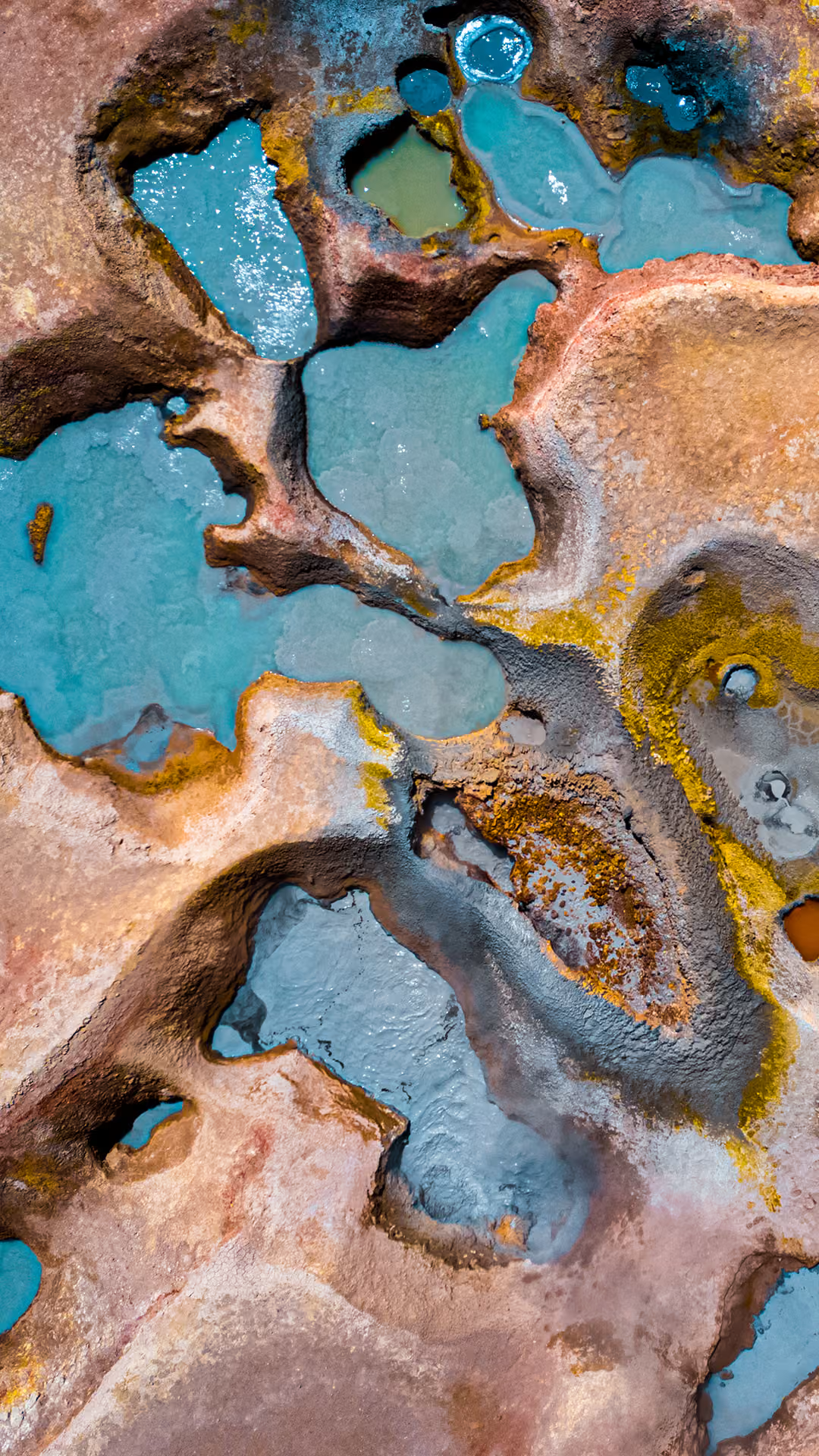
Sol de Mañana, Bolivia
Highland hotspot
At about 4,900 metres above sea level, Sol de Mañana is one of the most extreme geothermal zones on the planet. Rife with bubbling mudpots, steaming fumaroles and sulphur-stained sediment – all fuelled by volcanic heat just beneath the surface – this unique environment reminds us that Earth's molten interior is always looking for ways to sneak out. The streaks of orange, white and rust-red seen in this aerial shot are the results of mineral deposits and microbes that thrive in these infernal conditions. Despite its remote location on the Altiplano of southwestern Bolivia, Sol de Mañana draws plenty of scientists and curious travellers seeking a glimpse into our planet's hidden inner workings.
This unique environment reminds us that Earth's molten interior is always looking for ways to sneak out.
© mihtiander / iStock / Getty Images Plus 2026-09-11 08:45:51 :