select language: DE-AT
DE-BE
DE-CH
DE-DE
EN-AU
EN-CA
EN-GB
EN-IN
EN-NZ
EN-US
ES-AR
ES-ES
ES-MX
FR-BE
FR-CA
FR-FR
IT-IT
JA-JP
NL-BE
NL-NL
PT-BR
ZH-CN
DE-AT
DE-BE
DE-CH
DE-DE
ES-ES
FR-BE
FR-FR
IT-IT
NL-BE
NL-NL
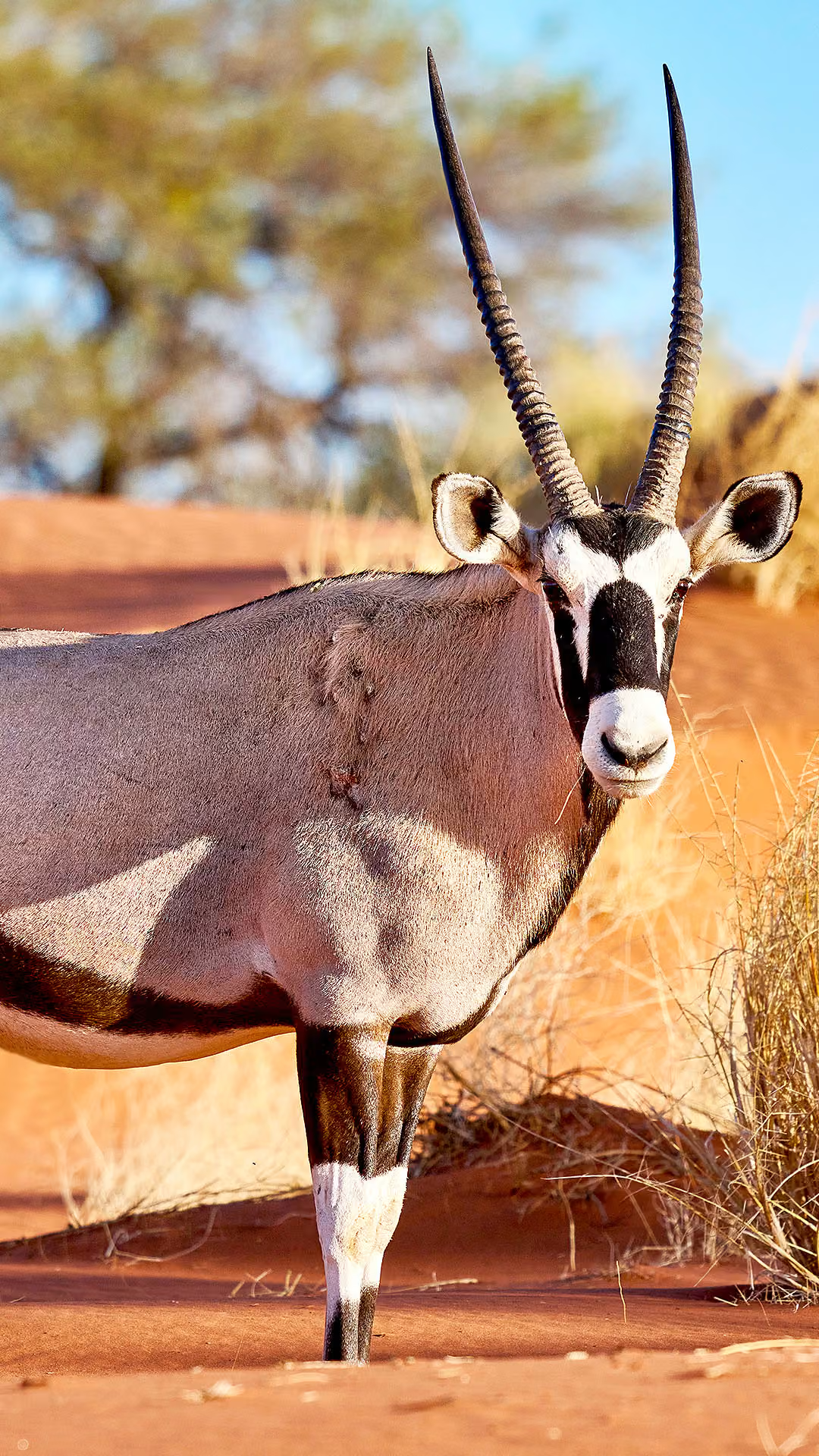
Gemsbok in Namib-Naukluft National Park, Namibia
Gemsboks rock
There's a lot about the gemsbok that's big. Over 1 metre tall at the shoulder and boasting horns nearly as long, they're bulky among their antelope brethren. Their herds are huge too – up to 200 animals during the rainy season – and they thunder over a gigantic area, roaming the Namib and Kalahari deserts that stretch from here in Namibia across southern Africa. Avid for any arid environment, this oryx variety isn't limited by geography – after they were introduced in the 1970s for hunting, a strong population still survives in the US state of New Mexico.
Native to African deserts and introduced to the American Southwest, gemsboks feel most at home in dry spots.
© Jürgen Ritterbach / Huber / eStock Photo 2026-09-11 08:45:51 :