select language: DE-AT
DE-BE
DE-CH
DE-DE
EN-AU
EN-CA
EN-GB
EN-IN
EN-NZ
EN-US
ES-AR
ES-ES
ES-MX
FR-BE
FR-CA
FR-FR
IT-IT
JA-JP
NL-BE
NL-NL
PT-BR
ZH-CN
DE-AT
DE-BE
DE-CH
DE-DE
ES-ES
FR-BE
FR-FR
IT-IT
NL-BE
NL-NL
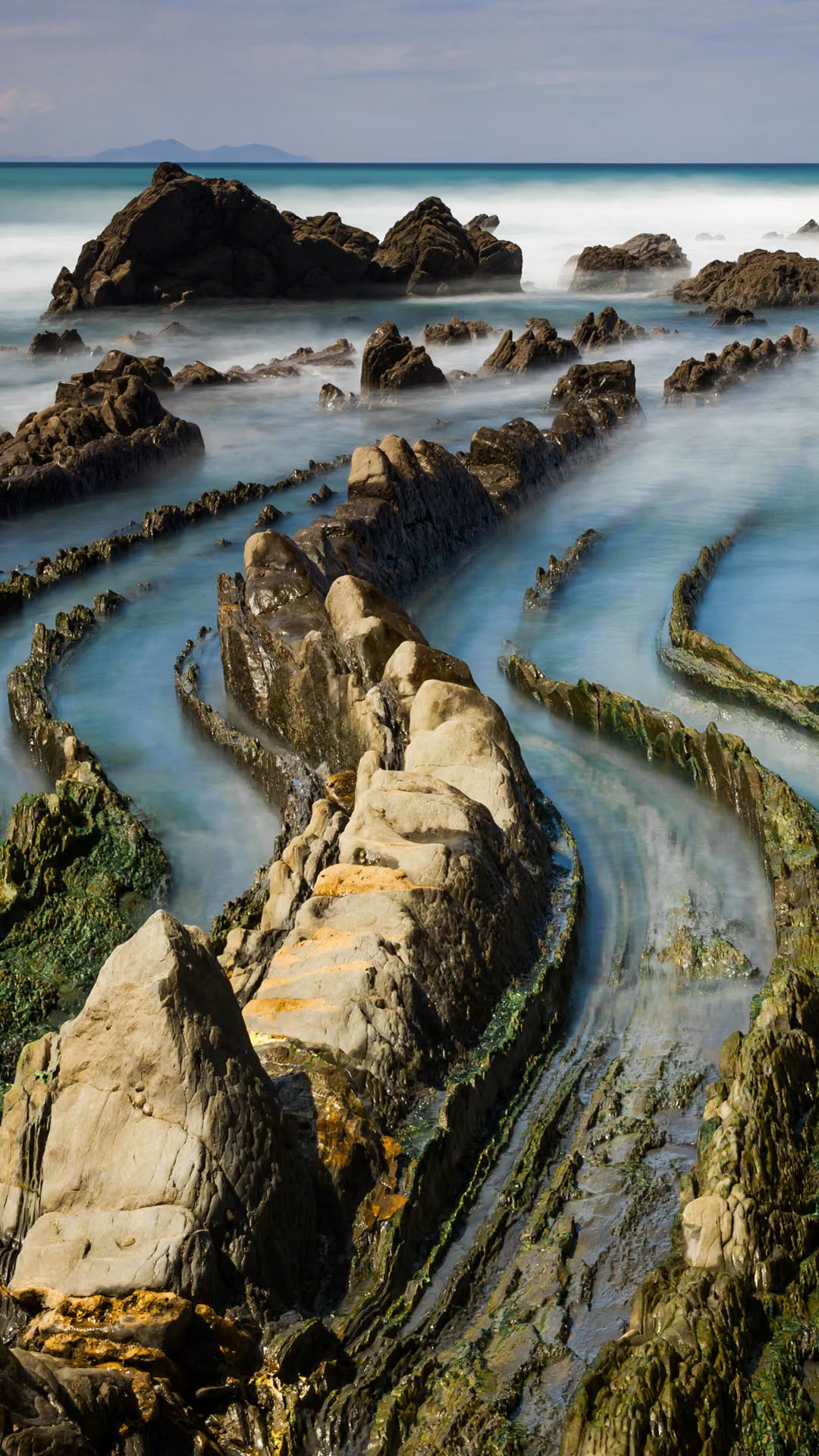
Flysch formations on the Cantabrian Sea, Spain
Stone squiggles
Looking like layers of lasagne as they're exposed by the tide, these wavy formations were snapped not in Italy but on the northern coast of Spain. This distinctive pattern of shallow rocky ridges, known as flysch, arose during a process called orogeny, the birth of mountains. As tectonic plates smashed together and were thrust upward to form the Basque Country's coastal peaks, landslides crashed down the new slopes and created powerful currents when they entered the water. Sediment was compressed against the seafloor by these currents, resulting in rigid strips of rock that deformed into undulating shapes as the fault settled.
Part of the larger Bay of Biscay, the Cantabrian Sea washes the rugged shores of Spain's Basque Country.
© Olimpio Fantuz / Sime / eStock Photo 2026-09-11 08:45:51 :