select language: DE-AT
DE-BE
DE-CH
DE-DE
EN-AU
EN-CA
EN-GB
EN-IN
EN-NZ
EN-US
ES-AR
ES-ES
ES-MX
FR-BE
FR-CA
FR-FR
IT-IT
JA-JP
NL-BE
NL-NL
PT-BR
ZH-CN
DE-AT
DE-BE
DE-CH
DE-DE
ES-ES
FR-BE
FR-FR
IT-IT
NL-BE
NL-NL
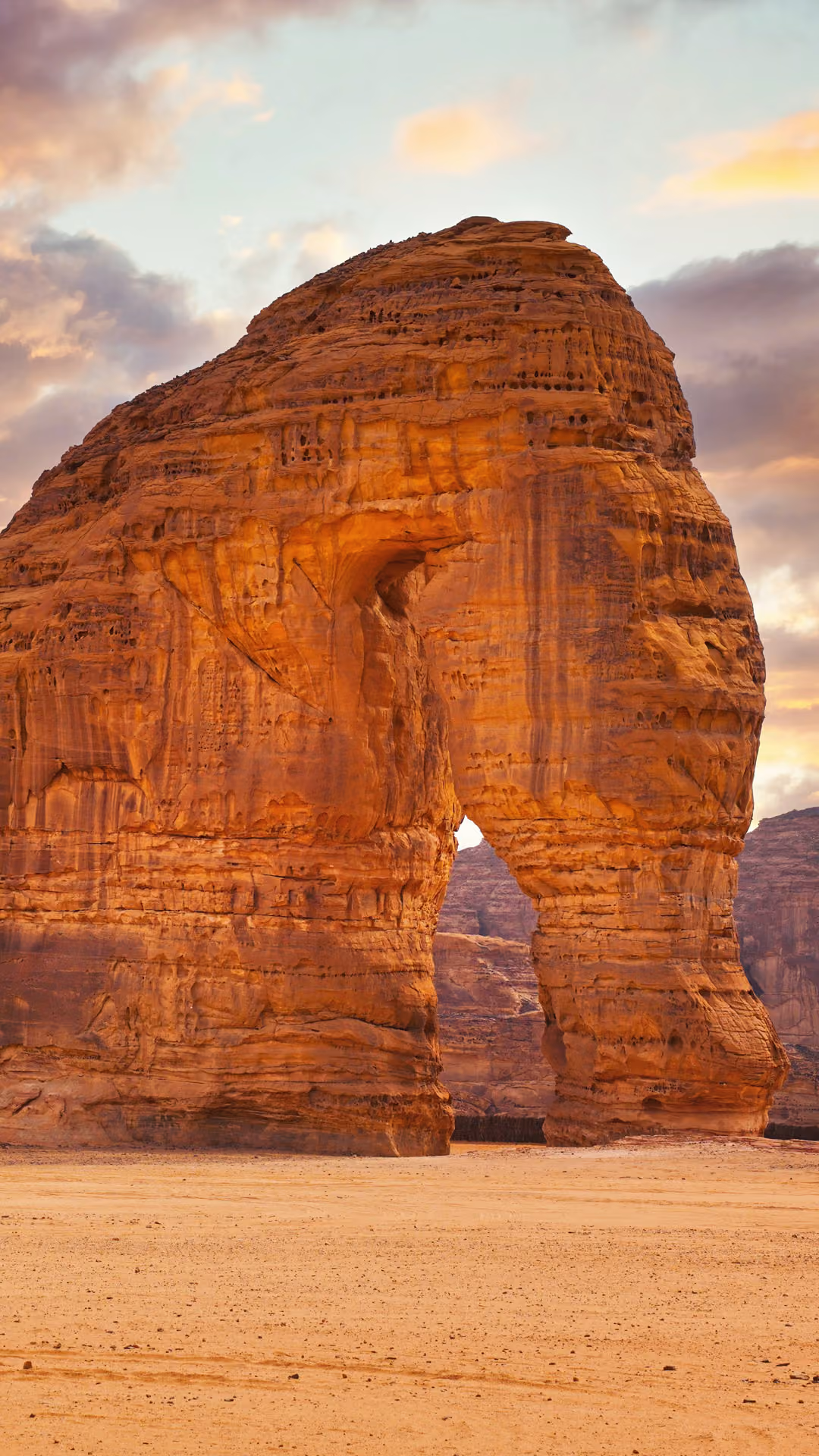
Jabal Al-Fil, Saudi Arabia
A petrified pachyderm?
It's hard to fathom the forces of wind and water that created this elephantine formation, especially in the driest country outside the Sahara. Jabal Al-Fil, one of the world's many "elephant rocks," is proof that even Saudi Arabia once received enough rain to sculpt impressive stone shapes – even if it took millions of years. Nearby, other carven chunks of sandstone got a little help from humans; the Nabataean society once held a presence here, leaving behind several signature rock-hewn tombs like those found in their old capital, Petra (which has its own much smaller elephant rock).
Sunset sets this sandstone "elephant" aglow, kicking off yet another Arabian night.
© Lubo Ivanko / Shutterstock 2026-09-11 08:45:51 :