select language: DE-AT
DE-BE
DE-CH
DE-DE
EN-AU
EN-CA
EN-GB
EN-IN
EN-NZ
EN-US
ES-AR
ES-ES
ES-MX
FR-BE
FR-CA
FR-FR
IT-IT
JA-JP
NL-BE
NL-NL
PT-BR
ZH-CN
DE-AT
DE-BE
DE-CH
DE-DE
ES-ES
FR-BE
FR-FR
IT-IT
NL-BE
NL-NL
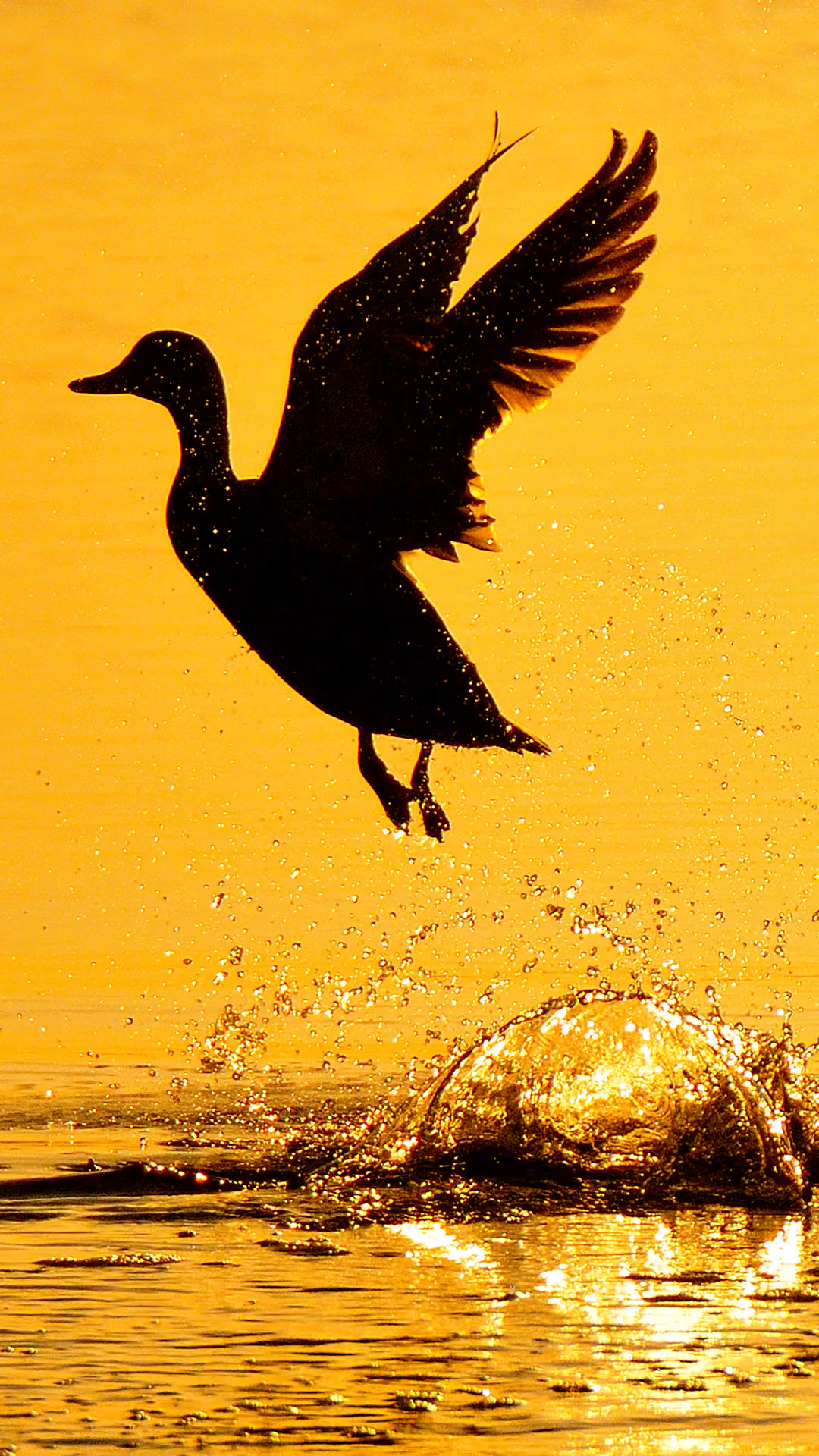
American black duck near Hatteras Island, USA
Quack in black
Caught mid-launch against a golden sky, the American black duck cuts a striking silhouette. Though still common along the Atlantic Flyway and rated a least-concern species, black ducks saw a roughly 50% decline in number between the 1950s and 1980s due to habitat loss, pollution and competition with invasive mallards. Their preferred breeding grounds – coastal marshes and estuaries – have been drained or degraded over time. The Outer Banks of the US state of North Carolina, with their protected wetlands and quiet inlets, remain an ideal stronghold for this iconic waterfowl. Conservationists are working to restore and maintain these habitats and limit human disturbance, giving black duck populations a chance to take off.
Caught mid-launch against a golden sky, this iconic waterfowl cuts a striking silhouette.
© jared lloyd / Moment / Getty Images 2026-09-11 08:45:51 :